A Taste of the Atlantic: A Foodie’s Sailing Guide to Macaronesia
Sailing Through Macaronesia’s Pantry
The Unique Appeal of a Culinary Voyage
For the discerning sailor, Macaronesia is more than just a convenient waypoint in the Atlantic. This collection of volcanic archipelagos—the Azores, Madeira, the Canary Islands, and Cape Verde—forms a pantry of unparalleled diversity. The region’s distinct character is etched into its food. Volcanic terroir imparts a unique minerality to wines and produce, while a tapestry of microclimates allows for an astonishing range of ingredients. Centuries of maritime trade have left their mark, blending Portuguese, Spanish, African, and Latin American influences into a cuisine that is both rustic and refined.
A culinary voyage here transforms the daily routine of galley provisioning. It becomes an act of discovery, an opportunity to swap out standard tinned goods for ingredients sourced directly from the land and sea. Imagine stocking your larder with cheeses aged in island caves, wines grown in ash, and fish caught just hours before, all within a short walk from your mooring. This is the essence of sailing through Macaronesia: letting the rhythm of the islands dictate your menu.
The Azores: Green Pastures and Ocean Bounty
Dropping anchor in the Azores feels like arriving in an emerald world set adrift in the deep blue Atlantic. These nine islands are a testament to nature’s abundance, where lush, green pastures meet a sea teeming with life. The resulting cuisine is honest and deeply flavorful, celebrating both the bounty of the ocean and the richness of the volcanic soil.
Dropping Anchor for Dairy and Earth
The Azores are renowned for their dairy, and for good reason. The cheese here is a staple of life and a perfect, long-lasting provision for any galley. The most celebrated is Queijo de São Jorge, a firm, hard cheese aged for months to develop a wonderfully spicy and tangy character. It’s robust enough to travel well and adds a sophisticated note to any onboard meal.
A more immediate pleasure is Queijo Fresco com Pimenta. This simple dish of soft, fresh cheese, often served with a vibrant red pepper sauce (pimenta da terra), is a ubiquitous starter in Azorean restaurants. It’s a perfect light snack to enjoy with a glass of local wine after a day on the water.
On the island of São Miguel, the earth itself becomes the oven. The famous Cozido das Furnas is a hearty stew of various meats and vegetables slow-cooked for hours in pots buried in geothermally active soil. For sailors moored at the Ponta Delgada marina, experiencing this unique culinary tradition is straightforward. A day trip by rental car or organised tour to the town of Furnas allows you to witness the pots being unearthed before savouring the meal in a local restaurant.
Volcanic Wines of Pico Island
Sailing along the coast of Pico Island offers a truly remarkable sight: a landscape gridded with black stone walls known as currais. These unique corrals, a UNESCO World Heritage site, protect the island’s grapevines from the harsh, salt-laden Atlantic winds. The vines grow low to the ground in the dark, fertile volcanic soil, producing wines of exceptional character.
The signature grape here is Verdelho. A tasting of this crisp white wine reveals a distinct minerality, bright acidity, and notes of citrus, making it an ideal companion for the region’s fresh seafood. To explore the wineries, sailors can find secure berths in the well-equipped marina in Horta on the neighbouring island of Faial, or at the smaller marina in Madalena, right on Pico itself.
Seafood Straight from the Deep Atlantic
The cold, nutrient-rich waters surrounding the Azores provide some of the finest seafood in the Atlantic. The star species that frequently appear on menus and in fish markets include succulent tuna, briny limpets (Lapas), and the prized, firm-fleshed wreckfish (Cherne).
An essential Azorean experience is sampling grilled Lapas. These small molluscs are typically cooked in their shells on a hot plate with a generous amount of garlic butter and a squeeze of fresh lemon. It is a simple, elemental dish that perfectly captures the taste of the ocean. For sailors, the legendary marina in Horta is not just a crucial transatlantic stop but also a culinary hub. Its waterfront is lined with restaurants where the daily catch from the local fishing fleet is transformed into unforgettable meals.
Madeira & Porto Santo: Fortified Wines and Tropical Tastes
Sailing into the harbor at Funchal, you are greeted by an amphitheater of lush, green mountains plunging into the sea. Madeira and its smaller sister island, Porto Santo, offer a distinct culinary identity shaped by centuries of maritime trade, subtropical abundance, and a truly singular wine that was born from the very sea voyages you are undertaking.
The Legendary Madeira Wine
No visit to Madeira is complete without exploring its world-famous fortified wine. This is not just a drink; it’s a taste of history, a liquid testament to the age of discovery. The wine’s unique character was discovered by chance when barrels, used as ballast on long sea voyages, were heated and cooled as they crossed the tropics. This journey transformed the wine, giving it an incredible longevity and complex, nutty flavors. Today, this process is replicated on the island through a method called estufagem, where the wine is gently heated over several months to caramelize the sugars and stabilize it.
The wine is typically categorized by its four noble grape varieties, each corresponding to a level of sweetness:
- Sercial: The driest style, with high acidity and notes of citrus and almond. An excellent aperitif.
- Verdelho: A medium-dry wine, with a smokier profile and a balanced, tangy finish.
- Bual (or Boal): Medium-sweet, with rich notes of raisin, caramel, and candied peel. A versatile dessert wine.
- Malmsey (or Malvasia): The sweetest and richest style, intensely aromatic with coffee and toffee notes.
For the visiting sailor, one of the greatest conveniences is the proximity of history to the harbor. After securing your lines at Funchal Marina, the famed wine lodges of houses like Blandy’s, D’Oliveiras, and Henriques & Henriques are just a short walk away. A tour of their cellars, or `caves`, offers a fascinating glimpse into the production process, followed by a tasting that allows you to journey through the island’s history, one glass at a time.
From the Mercado to the Galley
To truly stock your galley with the soul of the island, a trip to Funchal’s Mercado dos Lavradores (Workers’ Market) is essential. This vibrant, two-story market is an explosion of color, sound, and scent. Downstairs, the fish hall buzzes with activity as vendors display the day’s catch, while upstairs, pyramids of exotic fruits and displays of brilliant flowers create a feast for the senses.
When provisioning, keep an eye out for these local treasures:
- Black Scabbardfish (Espada): Don’t be deterred by its fearsome, eel-like appearance. This deep-sea fish has a delicate, white, and boneless flesh that is a cornerstone of Madeiran cuisine.
- Passionfruit (Maracujá): You will find numerous varieties here, from the common purple to the banana passionfruit. Their intense, tangy flavor is perfect for sauces, drinks, or simply spooned over yogurt.
- Bolo do Caco: This traditional, circular flatbread is cooked on a hot basalt stone slab. It’s wonderfully soft and fluffy, and is best bought fresh and served warm from your galley’s skillet with a generous spread of garlic butter.
For a simple yet quintessentially Madeiran meal onboard, try pan-frying a fillet of Espada until golden. Serve it alongside sautéed banana and a simple sauce made from fresh passionfruit pulp, a little butter, and a touch of honey. It’s a surprising combination that perfectly captures the island’s tropical palate.
Coastal Flavors and Safe Harbors
Madeira offers excellent facilities for visiting yachts. Funchal Marina places you in the heart of the action, with easy access to the city’s restaurants, markets, and wine lodges. For a quieter alternative, the marina at Quinta do Lorde, on the dramatic eastern peninsula of Ponta de São Lourenço, provides a more secluded and resort-like atmosphere.
While seafood dominates the coastal menus, one of Madeira’s most famous dishes is found in the hills above the city. Espetada em Pau de Lauro consists of large chunks of beef rubbed with garlic and salt, skewered onto aromatic laurel wood sticks, and grilled over an open fire. The heat releases the essential oils from the laurel, infusing the meat with a unique, savory flavor. It’s a communal and rustic dish worth taking a short taxi ride inland to experience authentically.
A short sail northeast lies Porto Santo, Madeira’s smaller, sandier sibling. Its golden beach stretches for nine kilometers, offering a laid-back counterpoint to Madeira’s dramatic cliffs. The culinary scene here is simpler, focused on incredibly fresh fish and seafood grilled to perfection in waterfront restaurants. Dropping anchor here for a few days provides a peaceful interlude and a chance to enjoy the Atlantic’s bounty in its purest form.
The Canary Islands: A Crossroads of Flavor
Sailing into the Canaries is like navigating a cultural and culinary crossroads. Centuries of trade between Europe, Africa, and the Americas have left an indelible mark on the islands’ palate. Here, the flavors are bold, rustic, and deeply connected to the volcanic land and the surrounding sea. For the visiting sailor, the seven islands offer a diverse pantry, from humble, essential staples to world-class cheeses and wines.
The Holy Trinity: Papas, Mojo, and Gofio
No culinary exploration of the Canary Islands is complete without encountering its foundational trio. These three staples are the heart and soul of Canarian home cooking and are found on nearly every table, from simple seaside taverns to sophisticated restaurants.
- Papas Arrugadas: These are not merely boiled potatoes. Small, local potato varieties are boiled in heavily salted water—traditionally seawater—until the water evaporates, leaving a delicate, salty crust on their “wrinkled” skins. They are served whole and are the perfect vessel for the islands’ signature sauces.
- Mojo Picón & Mojo Verde: These are the essential condiments of the Canaries. Mojo Picón is a vibrant red sauce made from red peppers, garlic, cumin, and vinegar, delivering a spicy kick that pairs wonderfully with meat and potatoes. Its counterpart, Mojo Verde, is a milder, herbaceous sauce of cilantro or parsley, garlic, and olive oil, typically served with fish.
- Gofio: More than just an ingredient, Gofio is a cornerstone of Canarian heritage. This toasted flour of corn or wheat was the sustenance of the indigenous Guanches. For the modern mariner, it’s a fascinating and versatile local provision to bring aboard. It can be added to thicken stews (potajes), mixed with broth to make a savory mash called gofio escaldado, or even used in desserts and breakfast preparations. Stocking a bag in your galley is a true taste of local tradition.
A World of Cheese Across Seven Islands
The Canary Islands are a paradise for cheese aficionados, with a particular excellence in goat cheeses (queso de cabra). Each island boasts its own specialties, shaped by local pastures, traditions, and microclimates. Many have achieved protected status for their quality and unique character.
- Fuerteventura’s Majorero: Perhaps the most famous of Canarian cheeses, Majorero is a firm, piquant goat cheese with a protected designation of origin. It has a nutty, milky flavor that intensifies with age. You’ll find it plain or with its rind rubbed in paprika (pimentón) or roasted gofio, each adding a distinct dimension.
- La Palma’s Queso Palmero: On the “isla bonita” of La Palma, the local goat cheese is distinguished by its gentle smoking over almond shells, pine needles, or prickly pear. This process gives Queso Palmero a delicate, aromatic smokiness that makes it truly memorable.
- Gran Canaria’s Flor de Guía: This unique cheese is a must-try for its unusual production. A creamy sheep’s milk cheese (or a blend), Flor de Guía is made using the vegetable rennet from thistle flowers. The result is a soft, sometimes runny cheese with a slightly bitter, complex finish.
Wines Born from Fire and Ash
The volcanic terroir of the Canary Islands produces wines of extraordinary character. Vines struggle for life in black sand and volcanic ash, their roots digging deep for nutrients, resulting in wines with a distinct minerality and intensity that you won’t find anywhere else.
- Lanzarote’s Malvasía Volcánica: The wine-growing landscape of Lanzarote is otherworldly. Vines are planted in deep pits, or hoyos, dug into the black volcanic ash, with a low stone wall protecting each one from the wind. This method produces the exquisite Malvasía Volcánica, a dry, aromatic white wine bursting with notes of citrus, fennel, and a saline, mineral finish.
- Tenerife’s Listán Negro: The dominant red grape of the islands, Listán Negro produces vibrant, peppery red wines with bright cherry and raspberry notes and a characteristic hint of volcanic soil. It’s a wonderfully versatile food wine, perfect for pairing with local grilled meats or cheeses.
- Accessing the Bodegas: The islands’ marinas serve as perfect gateways to their wine regions. From Marina Arrecife in Lanzarote, you can easily arrange a tour of the La Geria wine valley. Similarly, dropping anchor in Santa Cruz de Tenerife provides an excellent base for exploring the acclaimed bodegas in the Tacoronte-Acentejo region.
Cape Verde: Creole Spices and Atlantic Rhythms
As you sail south, the winds carry a different rhythm, and the flavors shift to reflect a vibrant Creole culture. Cape Verde, a crossroads of African and Portuguese influences, offers a cuisine that is soulful, robust, and deeply connected to both the land and the sea. The galley of a visiting yacht becomes a stage for simple, powerful flavors born from a history of resilience and celebration.
The Soul of Cape Verdean Cuisine
The heart of Cape Verdean food lies in its comforting, slow-cooked dishes that make the most of available ingredients. The national dish, Cachupa Rica, is the ultimate expression of this philosophy. It’s a hearty and complex stew of hominy corn, beans, sweet potatoes, cassava, and various vegetables, enriched with whatever fish or meat is on hand—often tuna, sausage, or pork. It’s a nourishing meal that tells the story of the islands, and finding a local restaurant that serves it is an essential part of the Cape Verdean experience.
For a quicker taste of the local flavor, look for the ubiquitous street food, Pastel com diabo dentro. These savory fried pastries, translating to “pastry with the devil inside,” are typically filled with a spicy mix of tuna, onions, and tomatoes. They are the perfect snack to grab while exploring ashore, offering a delicious and fiery kick.
Grogue: The Potent Spirit of the Islands
No culinary exploration of Cape Verde is complete without sampling its national spirit, grogue. This potent rum is distilled from sugarcane and is central to the local culture. It’s important to distinguish between the artisanal, pot-stilled grogue, which is fragrant and complex, and the more common industrial versions. The traditional producers, known as a trapiche, offer a glimpse into a time-honored craft.
For sailors moored in the excellent marina in Mindelo, a day trip to the neighboring island of Santo Antão is an unforgettable excursion. A short ferry ride takes you to a dramatic landscape of green valleys where you can visit a family-run trapiche, see the sugarcane being pressed by a bullock-driven mill, and sample grogue in its purest form.
The Fisherman’s Bounty
The waters surrounding Cape Verde are teeming with life, providing a bounty for local fishermen and visiting sailors alike. The primary catches here are powerful, open-ocean species that make for fantastic eating.
- Tuna: Yellowfin is abundant and its quality is exceptional.
- Wahoo (Serra): A firm, white-fleshed fish prized for its mild flavor, excellent for grilling.
- Grouper (Garoupa): A versatile fish perfect for stews or pan-frying.
The sailor’s hub of Mindelo on São Vicente is a prime location for provisioning. Its lively fish market, located conveniently close to the main anchorage, is a spectacle of morning activity. Here you can buy fish directly from the fishermen as they unload their daily catch. For a simple and perfect galley meal, there is little better than a thick steak of fresh tuna, marinated simply in lime juice and salt, and grilled for just a minute on each side.
The Foodie Mariner’s Log: Practical Sailing Tips
A successful culinary voyage is about more than just finding great restaurants; it’s about integrating the local pantry into your life at sea. Dropping anchor in Macaronesia offers a unique opportunity to provision your galley with ingredients you simply can’t find anywhere else. Here are a few practical tips for making the most of your gastronomic journey.
Top Marinas for Culinary Exploration
Your choice of mooring can make all the difference. A well-positioned marina is your gateway to local markets, bodegas, and cheese makers. While many excellent harbors dot the islands, a few stand out for their exceptional access to culinary treasures.
- Marina da Horta, Azores: A legendary crossroads for Atlantic sailors, Horta’s marina is not just a place to rest and repair. It’s steps away from restaurants serving the freshest tuna and grilled lapas, and it serves as the perfect base for ferry trips to Pico to explore the volcanic vineyards or to São Jorge to source its famous cheese.
- Funchal Marina, Madeira: Mooring here places you within a short, pleasant walk of the vibrant Mercado dos Lavradores and the historic wine lodges that line the streets. You can provision with exotic fruits and fresh espada in the morning and be tasting centuries-old Madeira wine by the afternoon.
- Las Palmas Marina, Gran Canaria: As one of the largest and most popular marinas in the Canaries, Las Palmas is a provisioning paradise. The nearby Mercado de Vegueta is a bustling hub of local life, offering everything from artisan cheeses to heaps of potatoes ready to be turned into papas arrugadas.
- Mindelo Marina, São Vicente, Cape Verde: The soul of Cape Verdean culture is palpable in Mindelo. The anchorage is a stone’s throw from the city’s lively fish market, where you can buy tuna directly from the fishermen. It’s also the main departure point for the ferry to Santo Antão, essential for any sailor wishing to visit a traditional trapiche and sample artisanal grogue.
Provisioning Like a Local
The true heart of each island’s cuisine is found in its mercado municipal, or central market. This is where you’ll find the freshest produce, the most authentic ingredients, and a direct connection to the people who grow, catch, and create the food.
When visiting the market, a few simple practices can enhance the experience:
- Arrive early. For the best selection, especially of fish and specialty baked goods, it pays to follow the local schedule.
- Observe and learn. See what the locals are buying in abundance. This is almost always what is freshest, in season, and at its peak flavor.
- Bring cash and a bag. While some larger stalls may accept cards, many smaller vendors operate with cash. Bringing your own reusable bags is both practical and environmentally friendly.
- Learn a few words. A simple greeting in the local language can transform an interaction from a transaction into a friendly exchange. Politeness and a genuine interest are universally appreciated.
A little vocabulary goes a long way. In the Azores, Madeira, and Cape Verde, you’ll be speaking Portuguese. In the Canary Islands, it’s Spanish.
Essential Terms:
Fish: Peixe (PT) / Pescado (ES)
Cheese: Queijo (PT) / Queso (ES)
Wine: Vinho (PT) / Vino (ES)
Bread: Pão (PT) / Pan (ES)
The Bill: A conta, por favor (PT) / La cuenta, por favor (ES)
Onboard Pairings and Simple Recipes
The ultimate reward for provisioning locally is preparing a simple, exquisite meal in your own galley, surrounded by the sea that provided the ingredients. Macaronesian cuisine, with its focus on fresh, high-quality elements, is perfectly suited to boat life.
Pairing Idea 1: Canarian Sunset Starter
Gently grill a thick slice of Fuerteventura’s Majorero cheese on each side until it’s warm and slightly softened. Place it on a plate and drizzle generously with Canarian miel de palma (palm honey). The salty, nutty character of the goat cheese is a perfect counterpoint to the rich, smoky sweetness of the honey. Pair this with a chilled glass of Lanzarote Malvasía Volcánica. The wine’s bright acidity, minerality, and aromatic notes of stone fruit will cut through the richness of the cheese, creating a perfectly balanced taste of the islands.
Pairing Idea 2: The Atlantic Main Course
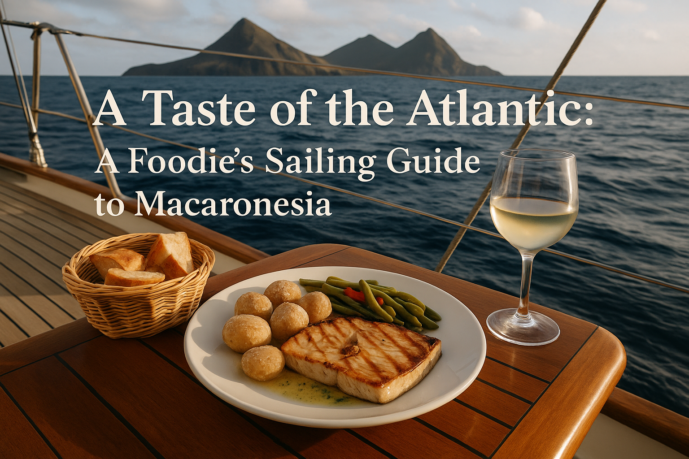
Take a freshly caught steak of Serra (wahoo) or tuna, seasoned simply with coarse sea salt and a squeeze of fresh lime. Grill it for a few minutes on each side, leaving the inside tender. Serve it alongside a portion of papas arrugadas and a dollop of zesty mojo verde. This simple preparation lets the quality of the fish shine. The ideal wine pairing is a crisp, mineral-rich Azorean Verdelho. Its clean profile and refreshing acidity complement the fish without overpowering it, while echoing the oceanic terroir of the entire meal.