“Leave No Trace” at Sea: Our Guide to Being a Responsible Ocean Traveler
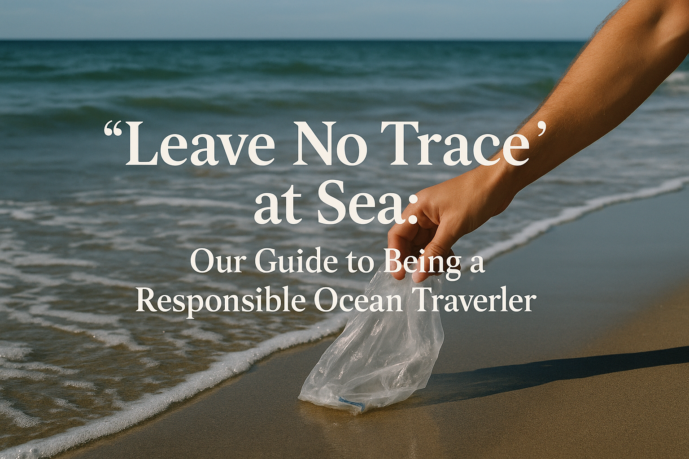
The Ocean’s Call: Why “Leave No Trace” Matters on Water
From Mountains to Marine: Adapting a Land-Based Ethos
The concept of “Leave No Trace” was born in the wildlands of our continents, a necessary ethic for hikers and campers seeking to preserve the pristine nature of forests and mountains. It is a philosophy of personal responsibility for our impact. Yet, when we trade our hiking boots for fins or step from a trail onto a deck, this ethic becomes not just relevant, but absolutely critical. The marine world, in all its vastness, is uniquely vulnerable. Unlike on land, where a piece of litter stays relatively put, the ocean’s currents can carry a single mistake for thousands of miles, affecting distant shores and countless creatures. Ecosystems like coral reefs and seagrass beds are exquisitely fragile, where a misplaced anchor or even the touch of a hand can cause irreversible damage.
The Life Below: A Quick Look at What’s at Stake
Beneath the surface lies a world of breathtaking complexity and importance. We sail over vibrant coral reefs, the bustling cities of the sea; we glide past swaying seagrass beds, the vital nurseries for countless species; and we anchor near protective mangrove forests, the guardians of our coastlines. Even the seemingly empty expanse of the open ocean teems with life, from microscopic plankton generating the air we breathe to the great whales that roam its depths. These are not just beautiful backdrops for our adventures; they are the planet’s life-support system. To put the threat into perspective, scientific reports estimate that without significant intervention, we could lose over 90 percent of the world’s coral reefs by 2050 due to climate change, pollution, and other human pressures.
Our Shared Commitment
A profound respect for the ocean is the compass that guides our mission. We believe that the privilege of experiencing the world’s waters comes with a deep responsibility to protect them. This guide is an extension of that core belief—not a list of rules, but a shared understanding for a community of people connected by a love for the sea. It is a journey we are on together with you, our fellow travelers, to ensure the magic of the ocean endures for generations to come. Protecting our shared blue spaces is the most important voyage we can ever undertake.
The 7 Principles of Ocean-Friendly Travel
The core philosophy of “Leave No Trace” is built on seven principles. While originally designed for terrestrial adventures, they translate beautifully to the marine world with a few key adjustments. Embracing these principles isn’t about restriction; it’s about a deeper, more respectful connection with the ocean and all its inhabitants.
1. Plan Ahead and Prepare for the Sea
A successful and responsible ocean journey begins long before you cast off lines or step onto the sand. Proper preparation is the most effective tool for minimizing your impact, ensuring your safety, and enhancing your experience. It replaces reactive problem-solving with proactive, thoughtful planning.
- Research Local Regulations: Every coastal area is unique. Before you go, investigate the local rules. Are you entering a Marine Protected Area (MPA) with specific restrictions? What are the fishing seasons and catch limits? Where are anchoring and mooring prohibited to protect sensitive habitats? A quick search on local government or marine park websites provides essential information.
- Pack for Minimal Waste: The easiest way to reduce ocean trash is to not create it in the first place. Pack reusable water bottles, coffee mugs, food containers, and shopping bags. By minimizing single-use plastics on land, you prevent them from ever threatening the marine environment.
- Choose Your Products Wisely: What you put on your body eventually washes into the sea. Select reef-safe sunscreens that are free of oxybenzone and octinoxate, chemicals known to cause coral bleaching. Opt for biodegradable soaps and cleaning supplies to reduce your chemical footprint.
2. Travel and Anchor on Durable Surfaces
The seafloor is not a uniform expanse; it is a complex tapestry of life-sustaining habitats. Just as you would stick to a trail in a forest, on the water you must choose where you travel and anchor with care to avoid causing irreparable damage.
- Understand the Seabed: Visually assess the water before dropping anchor. Look for light patches of sand or darker patches of mud, which are durable surfaces that can recover from anchoring. Avoid anchoring on dark, textured areas that indicate fragile coral reefs or the vibrant green of seagrass beds. These are critical habitats that can be destroyed by an anchor and chain.
- Use Mooring Buoys: Whenever available, designated mooring buoys are the best option. These are permanently anchored to the seafloor with a system designed to prevent a chain from dragging and scarring the bottom. Tying up to a mooring buoy completely avoids direct impact on the seabed.
- Practice Proper Anchoring: If you must anchor, learn the correct technique. Use the appropriate scope (ratio of anchor line to water depth) to ensure the anchor sets firmly and doesn’t drag. When retrieving the anchor, motor directly over it to lift it vertically, preventing it from plowing a destructive trench across the seafloor.
3. Dispose of Waste Properly: If It Goes With You, It Leaves With You
The ocean is not a garbage can. Every item that goes overboard, no matter how small or seemingly “natural,” can cause harm. A responsible traveler adopts a strict “pack it in, pack it out” mentality for everything they bring.
- The “Nothing Overboard” Rule: This is absolute and includes organic waste. A banana peel or apple core may be biodegradable, but it takes months or years to break down in saltwater. In the meantime, it is unnatural debris that can be ingested by marine life and introduces foreign nutrients into the ecosystem.
- Manage Onboard Waste: Boats generate specific types of waste that require careful handling. Use designated pump-out stations in marinas to dispose of blackwater (sewage) and greywater (from sinks and showers). Never discharge these in coastal waters or sensitive areas. For oily bilge water, use absorbent pads to capture oil and dispose of them as hazardous waste on shore.
- Secure Your Gear: A sudden gust of wind can send hats, bags, and empty containers flying into the water. Before getting underway or when the wind picks up, do a quick sweep of the deck and cockpit. Secure all loose items, and ensure your trash is stored in a covered, weighted container.
4. Leave What You Find: Take Photos, Not Treasures
The marine environment is a living system where every piece has a purpose. Removing shells, rocks, or other natural objects disrupts delicate ecological processes. The best souvenir is a beautiful photograph or a lasting memory.
- The Role of Natural Objects: An empty shell on the beach is a potential future home for a hermit crab. Rocks provide shelter for small creatures, and driftwood becomes a habitat for tiny organisms. Even broken coral fragments, over time, break down to create the sand of our beaches. Leaving them in place ensures the ecosystem remains whole.
- Never Touch Coral: Corals are not rocks; they are colonies of tiny, fragile animals. They are covered in a protective layer of mucus that shields them from disease. Touching coral, even lightly, can remove this slime layer and transfer harmful oils and bacteria from your skin, potentially killing the entire colony.
- Respect Cultural Heritage: Underwater sites like shipwrecks are not only fascinating dive spots but also historical artifacts and often solemn grave sites. Observe them with respect, never touching, disturbing, or removing any part of the wreck or its contents.
5. Minimize Vessel and Visitor Impact
Beyond trash and anchoring, our presence on the water creates other disturbances. From chemical and noise pollution to the physical force of our wake, we must be conscious of our vessel’s broader impact on the environment and other people.
- Prevent Pollution: Take care when refueling to avoid spills. Use a bib or absorbent collar around the fuel intake. Keep oil-absorbent pads in your engine compartment to catch any drips and have a spill kit ready for emergencies. A few drops from every boat adds up to significant pollution.
- Reduce Noise: Sound travels much farther and more efficiently through water than air. Excessive engine noise and loud music can disrupt marine wildlife’s ability to communicate, navigate, and hunt. Be mindful of your volume, especially near wildlife habitats, anchorages, and shorelines.
- Be Wake-Responsible: Your boat’s wake is a powerful force. In no-wake zones, travel at idle speed. Near shorelines, slow down to prevent your wake from causing erosion and damaging sensitive coastal vegetation. Large wakes can also capsize smaller craft like kayaks and endanger swimmers.
6. Respect Marine Wildlife
Observing animals in their natural habitat is one of the great joys of being on the water. This privilege comes with the responsibility to do so in a way that does not harm, stress, or alter the behavior of the creatures we admire.
- The “Rule of Thumb”: This is a simple and effective way to gauge your distance. Extend your arm and raise your thumb. If you cannot cover the entire animal with your thumb, you are likely too close. Maintain a respectful distance and let the animal control the encounter.
- Never Feed Wildlife: Feeding marine animals—including dolphins, turtles, and even seagulls—is incredibly harmful. It makes them dependent on humans, diminishes their natural foraging skills, and can lead to aggressive behavior. Human food is also unhealthy for them and can cause serious illness.
- Recognize Signs of Distress: Learn to read animal body language. If an animal suddenly changes its direction of travel, makes repeated alarm calls, slaps its tail, or dives abruptly, it is a sign of stress. If you see these behaviors, you are too close. Slowly and quietly back away.
7. Be Considerate of Other Ocean Users
The ocean is a shared public space. A responsible traveler respects not only the environment but also the safety and experience of everyone else on the water. Courtesy and awareness are as important as any navigational skill.
- Practice Navigational Etiquette: Know and follow the “rules of the road” on the water. Be predictable in your movements, maintain a proper lookout, and understand which vessel has the right of way in different situations. Safety is a collective responsibility.
- Give Others Space: Slower or more vulnerable users—like swimmers, paddlers, snorkelers, and fishers—deserve a wide berth. Give them plenty of room, slow down, and cross their path at a safe distance behind them, never in front.
- Share the Experience: Whether at a popular anchorage, a dive site, or a wildlife viewing spot, be mindful of crowding. Allow others the chance to enjoy the experience. Sometimes the most considerate act is to wait your turn or move on to allow others their moment of peace and discovery.
Your Guide in Action: Responsible Practices for Every Traveler
The principles of “Leave No Trace” are not abstract ideals; they are a set of practical actions we can integrate into every ocean adventure. No matter how you choose to connect with the sea, you have a role to play. Here is a guide to applying these principles to your specific activity, empowering you to become a guardian of the marine world.
For the Sailor and Motorboater
As the captain of your vessel, you are the primary steward of your immediate marine environment. Careful planning and mindful operation are paramount to protecting the waters you navigate.
- The Pre-Departure Eco-Checklist: Before casting off, run through a mental or physical checklist. Ensure your engine is well-maintained to prevent fluid leaks. Check that all loose items on deck are secured. Confirm you have adequate waste storage, including separate containers for trash, recycling, and hazardous materials like oily rags.
- Spill-Proof Refueling: Fuel spills are highly toxic to marine life. Always refuel in a designated area. Use an absorbent bib or collar around the fuel intake to catch any drips. Avoid overfilling your tank by listening to the sound and filling slowly. If a small spill occurs, use an oil-absorbent pad immediately; never use detergents, as they cause the oil to sink and do more harm.
- Onboard Waste Management: A well-managed boat is a clean boat. Familiarize yourself with regulations for blackwater (sewage) and greywater (from sinks and showers). Use designated pump-out stations at marinas instead of discharging waste, even if legally permissible. Everything you bring aboard, including food scraps, should be stored securely and disposed of properly on shore.
For the Diver and Snorkeler
As a visitor to the underwater world, your presence can have a direct impact on the delicate life you’ve come to admire. Your goal is to be a silent, weightless observer, leaving nothing behind but bubbles.
- Mastering Buoyancy Control: This is the single most important skill for a responsible diver. Perfecting your buoyancy allows you to float effortlessly, preventing accidental contact with fragile coral or stirring up sediment. Keep your gauges and alternate air source secured so they don’t drag along the reef. Practice in a sandy area or pool until you can hover without using your hands.
- Choosing a Responsible Dive Operator: Your choice of guide matters. A responsible operator will provide a thorough briefing on local ecosystems and conservation rules, maintain small group sizes, use mooring buoys instead of dropping anchors on reefs, and demonstrate a clear commitment to environmental protection. Ask them about their sustainability policy before you book.
- Cleaning Gear to Prevent Invasive Species: After your dive or snorkel, thoroughly rinse all your gear—wetsuit, BCD, mask, fins—with fresh water. This simple step is crucial for preventing the transport of non-native species from one dive site to another, which can devastate local ecosystems. Allow your gear to dry completely before your next ocean entry.
For the Kayaker and Paddleboarder
Moving under your own power offers a uniquely intimate connection with the ocean. This quiet mode of travel allows for incredible wildlife encounters, but it also carries a responsibility to move with grace and awareness.
- The Art of “Silent Passage”: Your paddlecraft allows you to approach wildlife without the noise of an engine. Use this advantage respectfully. Observe animals from a distance, never pursue them, and avoid paddling directly at them. If an animal changes its behavior because of your presence, you are too close. Let them control the encounter.
- Using Designated Launch Points: Launching and landing your craft can damage sensitive shoreline vegetation and contribute to erosion. Always use designated boat ramps or durable surfaces like sand or gravel beaches. Avoid dragging your kayak or board over seagrass beds or fragile dunes.
- Packing for a Small Craft: Space is limited, so pack smart. Secure all your belongings to your vessel so nothing can fall or blow into the water. A simple dry bag can hold your trash. Always file a “float plan” with someone on shore, letting them know your route and expected return time for your own safety.
For the Beachgoer and Cruise Passenger
Whether you are enjoying a day on the sand or exploring a port of call, your choices on land have a direct line to the sea. You are a crucial part of the coastal ecosystem and economy.
- The “Plus One” Principle: This is a simple, powerful practice. Leave the beach even better than you found it by picking up at least one piece of trash that isn’t yours. By doing so, you not only clean up your immediate area but also set a positive example for others.
- Asking Questions on Shore Excursions: When booking a tour, inquire about its environmental impact. Ask your guide if they support local conservation efforts, how they manage waste, and if they follow wildlife viewing guidelines. Your questions signal to operators that sustainability is a priority for travelers.
- Supporting Local Communities: Choose to spend your money with intention. Eat at local restaurants that serve sustainably sourced seafood. Buy authentic crafts from local artisans rather than mass-produced souvenirs made from marine life (like shells or coral). A healthy local economy is often tied to a healthy local environment.
Go Beyond “Leave No Trace”: Become an Ocean Steward
Adhering to the “Leave No Trace” principles is the foundation of responsible travel, but your positive impact doesn’t have to end there. By making conscious choices and taking small, active steps, you can transition from being a passive visitor to an active guardian of the marine world. This is the essence of ocean stewardship—a commitment to leaving the ocean not just as you found it, but even healthier for future generations.
The Power of Your Choices
Every dollar you spend on your travels is a vote for the kind of world you want to see. When you choose to support businesses that prioritize the health of the ocean, you send a powerful message to the entire industry. Look for tour operators, charter companies, and dive shops that openly state their commitment to sustainability. Ask them about their waste management policies, their anchoring practices, and their wildlife interaction guidelines.
Making these informed decisions is a cornerstone of stewardship. It’s a responsibility we take seriously, which is why we meticulously vet our partners and champion those who demonstrate a profound respect for the marine environment. By aligning with companies that share your values, you ensure your journey contributes to a positive legacy, turning a simple vacation into a meaningful investment in the ocean’s future.
Contribute to a Healthier Ocean
You can play a direct role in the science and conservation that protects our seas. Many global and local initiatives rely on the eyes and ears of travelers like you. Participating in these “citizen science” programs is easier than ever:
- Report Debris: Use apps like the Marine Debris Tracker to log and report litter you find on beaches or in the water, contributing valuable data to researchers.
- Log Wildlife Sightings: Submitting photos and locations of marine life—from whales and dolphins to sea turtles—to platforms like iNaturalist can help scientists track populations and migration patterns.
- Monitor Coral Health: If you’re a diver, you can get trained to participate in reef health surveys that monitor for bleaching and disease.
Beyond data collection, consider the immediate impact of joining a local cleanup. Whether organized by a community group or something you initiate with your own travel companions, spending an hour clearing a stretch of coastline is one of the most tangible ways to improve an ecosystem. It connects you to the place, demonstrates your commitment, and leaves a visible, positive mark.
Share the Ethos
Your experiences are powerful. When you share photos and stories from your travels, you have an opportunity to inspire others. Instead of simply posting a beautiful picture, tell the story behind it. Talk about the incredible experience of watching a sea turtle from a respectful distance, the satisfaction of a plastic-free picnic on the beach, or the responsible tour operator that made your trip special. Frame your adventures around a narrative of respect and wonder.
Ultimately, the most effective tool for change is leading by example. When other boaters see you using a mooring buoy instead of dropping anchor on a reef, or when fellow beachgoers notice you packing out all your trash, it normalizes responsible behavior. Your quiet actions can speak volumes.
As part of our own commitment, we pledge to be a continuous and reliable resource for you on this journey. We will keep sharing knowledge, highlighting best practices, and celebrating the community of travelers dedicated to protecting our blue planet. Together, we can ensure the ocean’s call is answered with respect, care, and a shared sense of stewardship for generations to come.