Safety at Sea: How We Prepare for Every Possibility on a “Grande Traversée”
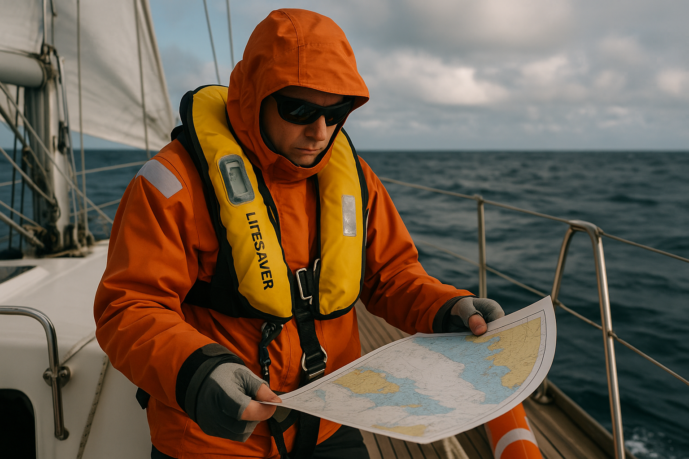
Our Guiding Principle: Safety is the Bedrock of Adventure
The “Grande Traversée” Mindset: Proactive Preparation, Not Reactive Response
An ocean crossing is an entirely different realm from coastal sailing. Near the shore, assistance is often just a radio call away. On a Grande Traversée, spanning thousands of miles of open water, the horizon is empty and the nearest port can be over a week away. This fundamental reality shapes our entire approach. We do not simply prepare for a voyage; we cultivate a mindset of profound self-reliance. Our safety philosophy is built on prevention, where meticulous planning and foresight are our most essential tools.
Months before the first line is cast off, our work begins. Every system is scrutinized, every piece of equipment is tested, and every contingency is considered. We operate with the deep understanding that out on the ocean, we are our own first responders. The crew is the first, last, and only line of defense. This responsibility is not a burden; it is the guiding principle that informs every decision we make, ensuring that adventure is always built upon an unshakable foundation of safety.
A Culture of Redundancy and Vigilance
At sea, we live by the mariner’s axiom: “two is one, and one is none.” This philosophy is woven into the fabric of our vessel and our operations. It means that for every critical system, a reliable and independent backup is always ready. A single point of failure is an unacceptable risk, so we systematically eliminate it. This applies to the very heart of the boat’s functions:
- Navigation: Should a primary chart plotter fail, a secondary, independent system is online. Should both fail, we are fully proficient with a sextant and traditional paper charts.
- Communication: Beyond standard VHF, our satellite phone and Single Sideband (SSB) radio ensure we can communicate from anywhere on the planet.
- Power: Our ability to generate electricity is diversified across the engine’s alternator, extensive solar panels, and a standalone generator.
- Steering: In the unlikely event of a primary steering system failure, a robust, independent emergency tiller can be deployed immediately.
This technical redundancy is matched by a human element: a constant state of vigilance. Safety is not a passive checklist but an active, shared culture. Every member of the crew is trained to be an observer—to listen to the sounds of the boat, to feel its motion through the water, and to constantly assess the environment. This collective awareness ensures that small issues are noticed and addressed long before they can become significant problems.
The Heart of Our Operation: A Highly Trained and Experienced Crew
Beyond Certifications: The Expertise That Truly Matters
While professional certifications provide an essential baseline of knowledge, they are merely the starting point for our crew selection. On a “Grande Traversée,” where self-sufficiency is absolute, it is the depth of real-world experience that forms the true backbone of our safety ethos. Our captain and crew hold internationally recognized qualifications as a minimum standard, including:
- RYA/MCA Yachtmaster Ocean: The highest level of qualification, proving expertise in celestial navigation, passage planning, and vessel management far from land.
- STCW (Standards of Training, Certification and Watchkeeping): A suite of certifications covering personal survival techniques, firefighting, first aid, and security awareness.
- Advanced First Aid / Medical Care at Sea: Specialized training that goes far beyond basic first aid, preparing our crew to manage significant medical situations miles from professional help.
However, it is the thousands of logged ocean miles, the multiple transatlantic crossings, and the hard-won wisdom gained from navigating through countless weather systems that truly define our crew’s capability. This seasoned judgment—knowing when to push, when to be patient, and how to read the subtle language of the sea and the vessel—is an unwritten qualification that underpins every decision made on board.
Continuous Drills: Rehearsing for the Unthinkable
On the open ocean, an emergency response cannot be a moment of hesitation or consultation with a manual. It must be an immediate, instinctive reaction born from rigorous and repeated practice. Our drills are not about checking a box; they are about building muscle memory. The goal is to ensure that in a moment of high stress, the crew acts with calm, coordinated precision. We conduct regular, realistic drills throughout our voyages, turning theoretical knowledge into practical skill.
Man Overboard (MOB) Drills
We regularly practice a variety of MOB recovery techniques, from the classic Lifesling method to direct approaches, adapting our response to simulated sea states. Every crew member, including our guests, becomes familiar with their role, whether it’s spotting, maneuvering the vessel, or preparing recovery equipment, ensuring a swift and effective retrieval.
Firefighting Drills
A fire at sea is one of the most serious threats a vessel can face. Our drills simulate fires in the most likely locations—the galley, the engine room, and living quarters. We practice locating and using the correct type of extinguisher, deploying the fire blanket, and securing fuel and electrical systems, all while emphasizing speed and communication.
Abandon Ship Procedures
While it is the absolute last resort, we prepare for it with the utmost seriousness. Drills involve a thorough review of life raft deployment, including the function of the hydrostatic release, and a detailed inventory of our comprehensive abandon-ship grab bag. This ensures everyone knows what to do and what to take should the unthinkable happen.
Medical Emergency Simulations
With help potentially days away, our crew must be proficient in managing medical issues. We role-play responses to a range of scenarios, from deep lacerations and fractures to recognizing the symptoms of more critical conditions. This includes familiarization with our extensive offshore medical kit and the proper use of the onboard Automated External Defibrillator (AED).
The Human Factor: Fatigue Management and Crew Well-Being
A capable vessel and the best equipment are only as effective as the crew operating them. We place immense importance on managing the human element of a long passage. Our watch system is meticulously designed to ensure every person on board receives adequate, uninterrupted rest. This is non-negotiable, as a well-rested crew is an alert, focused, and safe crew. Fatigue is a known contributor to poor decision-making, and our schedule is our primary defense against it.
Beyond sleep, we have established protocols for monitoring the physical and mental health of everyone on board. This includes ensuring proper nutrition and hydration, encouraging open communication, and being attuned to the signs of stress or exhaustion. A positive, supportive, and respectful onboard environment is not just a pleasantry; it is a critical safety tool that fosters clear communication and sound judgment when it matters most.
The Vessel: A Fortress Built for the Open Ocean
The finest crew and the most meticulous plans are only as effective as the vessel they command. Our yacht is not merely a mode of transport; it is our home, our shield, and our primary life-support system in the vastness of the ocean. It has been chosen and maintained with one purpose in mind: to serve as a secure and reliable platform capable of handling the most demanding conditions the sea can offer.
Rigorous Inspections and Structural Integrity
Before every Grande Traversée, our vessel undergoes an exhaustive series of inspections that far exceed standard checklists. Every component critical to safety is scrutinized. This includes a detailed examination of the hull for any signs of stress, a full rig check from masthead to chainplates, an inspection of every sail for wear, and a complete functional test of the primary and emergency steering systems. This isn’t just a pre-departure task; it’s the culmination of a continuous cycle of preventative maintenance and professional servicing. Our yacht adheres to a strict schedule of professional surveys, ensuring that its structural integrity is regularly validated by independent experts.
Critical Systems: Redundancy for Ultimate Reliability
On the open ocean, self-sufficiency is paramount. We operate under the principle that any single failure should never escalate into an emergency. To achieve this, we have built layers of redundancy into every critical system on board. This ensures that a technical issue remains a manageable problem, not a voyage-ending crisis.
Navegación
- Multiple, independent GPS chart plotters running on separate electrical circuits, ensuring we always have a clear electronic picture of our position and surroundings.
- A full set of professional paper charts for the entire passage area, accompanied by the tools and expertise for traditional navigation.
- A professional-grade sextant and the knowledge to use it, providing a non-electronic means of position fixing that is immune to power failure or satellite disruption.
Communication
- A long-range satellite phone, providing reliable voice and data communication from anywhere on the globe for weather updates and emergency support.
- A powerful SSB (Single Sideband) Radio, which allows for long-distance voice communication and the reception of weather data and email via Pactor modem.
- Multiple fixed and handheld VHF radios for line-of-sight communication with other vessels and coastal stations.
Power Generation
- The primary engine alternator, which efficiently charges our battery banks whenever the engine is running.
- A high-capacity array of solar panels, providing silent, constant power generation during daylight hours to run essential systems without relying on the engine.
- A standalone diesel generator, completely independent of the main engine, capable of powering all onboard systems and recharging batteries if needed.
Steering
- Our robust and reliable primary wheel-and-cable steering system, which is regularly inspected for integrity and smooth operation.
- A completely independent and powerful emergency tiller system that can be fitted directly to the rudder post, ensuring we maintain positive control of the vessel even in the unlikely event of a total primary steering failure.
Our Onboard Arsenal: State-of-the-Art Safety Equipment
While the crew is our primary safety asset, the quality and readiness of our equipment is a close second. We believe in investing in the best, most reliable gear available, because when you are a thousand miles from shore, there is no substitute for quality. Our vessel is equipped not just to meet, but to exceed the most stringent international standards for offshore passages.
Personal Safety for Every Soul Aboard
The safety of the vessel begins with the safety of each individual. Every person on board is equipped with their own personal safety gear, ensuring protection is always within arm’s reach. This gear is not stowed away; it is assigned, fitted, and ready for immediate use.
- High-Specification Life Jackets: Each crew member and guest is assigned a Spinlock Deckvest 6D, a top-tier auto-inflating life jacket with an integrated harness. These are not simple buoyancy aids; they are advanced survival systems equipped with a high-intensity strobe light and a personal locator beacon (PLB) that can transmit a distress signal via satellite.
- Heavy-Duty Tethers and Jacklines: The principle of “always clipped in” is paramount in heavy weather or when working on deck at night. Our system of robust, strategically-placed jacklines and two-meter safety tethers ensures you can move securely from the cockpit to the bow without ever being untethered from the vessel.
- Individual Immersion Suits: For passages in colder latitudes or in the unlikely event of an abandon-ship scenario in cold water, each person has access to a full immersion suit. These Mustang Survival suits are designed to protect against hypothermia, dramatically increasing survival time in the water.
Vessel-Wide Emergency Gear
Beyond personal gear, our vessel is outfitted with a comprehensive suite of equipment designed to handle specific emergencies. This gear is meticulously maintained, clearly marked, and its location and use are a core part of our guest safety briefing.
For Man Overboard (MOB) Situations
A person in the water is one of the most critical emergencies at sea. Our equipment and training are focused on immediate marking of the location and a swift, controlled recovery.
- Immediate Deployment Gear: We have a complete Dan buoy and horseshoe buoy with a drogue and light, ready for instant deployment to mark the MOB position. A Lifesling recovery system is also mounted on the stern pulpit for efficient retrieval of a conscious person from the water.
- Electronic Alarms: Every personal life jacket is fitted with an Ocean Signal AIS-MOB beacon. When activated, it transmits an emergency signal that instantly triggers a loud alarm on our navigation chart plotter and alerts all other AIS-equipped vessels in the vicinity, providing a precise, real-time location of the person in the water.
For Fire Emergencies
Fire on a vessel is an extremely serious threat. Our approach is based on prevention, rapid detection, and having the right tools for immediate suppression.
- Targeted Fire Extinguishers: We have multiple fire extinguishers rated for A (solids), B (liquids), and C (electrical) type fires. They are strategically placed throughout the vessel—in the galley, cabins, engine room, and cockpit—for immediate access.
- Galley Safety: A dedicated fire blanket is mounted in the galley, providing a quick and effective way to smother a cooking-related fire without delay.
- Engine Compartment Protection: The engine room is protected by a Sea-Fire automatic fire suppression system, which will discharge and extinguish a fire in that space without human intervention, protecting a critical area of the vessel.
For Medical Emergencies
With medical help potentially days away, we must be completely self-sufficient. Our medical supplies and training reflect this reality.
- Comprehensive Medical Kit: We carry an offshore medical kit that far exceeds the requirements for Category 1 / World Sailing standards. It is professionally specified and stocked to handle everything from minor injuries to significant trauma and medical events.
- Onboard Defibrillator: We carry an Automated External Defibrillator (AED) on board. This device can be life-saving in the event of a sudden cardiac arrest, and all crew are trained in its proper use.
- 24/7 Professional Medical Support: Through our satellite phone, we have 24/7 access to a shore-side team of emergency doctors. This vital service allows us to get real-time professional medical advice, from diagnosis to treatment protocols, no matter where we are in the world.
For Abandon Ship Scenarios
This is the ultimate last resort, a scenario we train for but hope to never face. Our preparation is designed to maximize the chances of survival and rescue.
- Ocean-Rated Life Raft: Our vessel is equipped with a SOLAS-approved ocean-rated life raft from a leading manufacturer like Viking or Ocean Safety. It is mounted in a cradle with a hydrostatic release, meaning it will automatically deploy and inflate if the vessel sinks.
- Comprehensive Grab Bag: Stored next to the life raft is a dedicated, waterproof abandon-ship grab bag. This bag contains everything needed for survival until rescue, including emergency water, high-energy food rations, a full set of SOLAS-rated flares, a signaling mirror, a first aid kit, and other essential survival equipment.
Protocols in Action: Managing Every Mile of the Journey
Meticulous Passage Planning and Weather Routing
A successful ocean crossing is defined not by speed, but by the quality of the voyage. Our planning begins long before the lines are cast off, with an intensive focus on weather. We believe in the mariner’s wisdom of “slowing down to go fast,” which means we prioritize a safe and comfortable route over a direct, but potentially punishing, one. We do not race against the weather; we work in harmony with it.
To achieve this, we synthesize data from multiple professional sources:
- GRIB Files: We download detailed digital weather files via satellite, providing granular forecasts for wind, waves, and pressure systems directly onto our navigation software.
- Weatherfax & Synoptic Charts: We receive and analyze official meteorological charts, which give us the broad, strategic view of weather patterns, helping us to understand the “why” behind the forecast.
This process doesn’t end at the dock. Every day at sea, we receive fresh data, allowing us to continuously refine our route, positioning the vessel to avoid the worst of any developing systems and ensuring the smoothest possible passage.
Communication: Our Constant Lifeline
While the goal of a “Grande Traversée” is to experience the magnificent isolation of the open ocean, we are never truly out of reach. A disciplined communication schedule is a non-negotiable part of our daily routine at sea. We maintain a mandatory daily check-in with our dedicated shore-side support team, reporting our position, vessel status, and weather observations. This ensures that a professional team is always aware of our progress and well-being.
For the ultimate peace of mind, the vessel is equipped with an EPIRB (Emergency Position-Indicating Radio Beacon). This device is our final, most critical lifeline. In the event of a grave and imminent danger, activating the EPIRB sends a distress signal with our precise GPS location to international search and rescue authorities via the Cospas-Sarsat satellite system. It is a silent guardian, ready to provide a global alert should all other means of communication fail.
The Guest Safety Briefing: Your Role on the Crew
On our vessel, you are not a passenger; you are an integral member of the crew. We believe that knowledge dispels fear and builds confidence, and our safety philosophy is a shared one. Before every departure, we conduct a mandatory and comprehensive safety briefing. This is not a passive lecture, but a hands-on orientation designed to empower you.
During this briefing, we cover the essential “what, where, and how” for all critical equipment. You will physically handle your personal safety gear, learning to properly fit your life jacket and harness. We will walk through the location and operation of firefighting equipment, man-overboard gear, and emergency communication devices. Most importantly, we will discuss potential scenarios and clarify each person’s role, ensuring that in the unlikely event of an emergency, our response is a coordinated, calm, and effective team effort. This preparation is the key to clear-headed action and is fundamental to the shared adventure ahead.