Au-delà du bateau : Les meilleures randonnées et aventures à terre à Madère et aux Açores
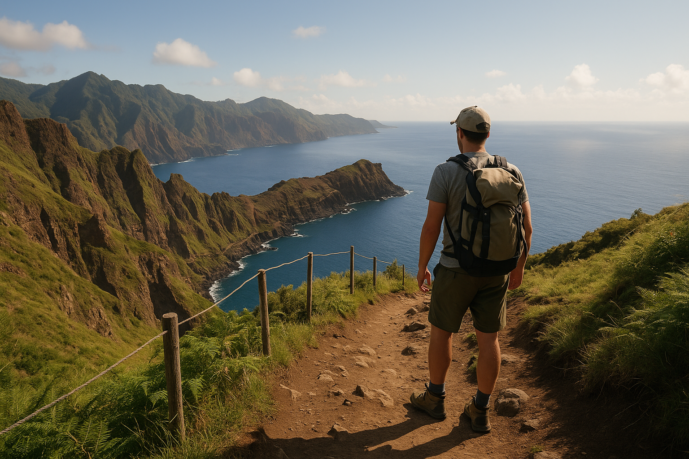
From Deck to Dirt Path: Why Your Sailing Trip is Just the Beginning
The Freedom of the Sea, The Treasures of the Shore
The allure of a sailing voyage is undeniable—the rhythmic sound of water against the hull, the freedom of the open ocean, and the skill of harnessing the wind. Yet, in archipelagos like Madeira and the Azores, the boat is more than just the destination. It is the most elegant and effective form of transport, a floating basecamp that provides a unique and powerful perspective. Approaching these volcanic islands from the sea offers a dramatic preview of the adventures that await on land. You witness the sheer scale of the cliffs, the deep green of the forests, and the raw, volcanic textures of the coastline in a way that is simply impossible from a road. Your sailing journey becomes the prologue, building anticipation as the treasures of the shore slowly reveal themselves.
Anchoring in Paradise: Accessing Remote Trailheads by Boat
While many visitors are bound by roads and designated parking areas, a sailboat grants you unparalleled access to the wilder heart of the islands. This is where a sailing trip truly transforms into a multi-sport expedition. Your vessel can take you to secluded coves and hidden bays that are difficult, if not impossible, to reach by car. Instead of starting a hike from a bustling trailhead, you can drop anchor in a tranquil, sheltered inlet, row ashore in a dinghy, and begin your exploration in solitude.
This approach allows you to experience popular regions from an entirely new angle, joining trails from quiet access points far from any crowds. It opens up a world of possibility, turning a simple hike into a genuine discovery. The adventure no longer begins when you lace up your boots, but the moment you choose your anchorage, charting a course to a piece of coastline you can, for a time, call your own.
Madeira: The Floating Garden’s Epic Trails
Known as the “Floating Garden of the Atlantic,” Madeira is a hiker’s paradise. Its dramatic volcanic interior is crisscrossed with unique trails that offer something for every level of fitness and ambition. After anchoring in a sheltered bay, you can step directly into a world of profound natural beauty.
Hiking the Levadas: Following Ancient Waterways
The island’s most famous trails follow the Levadas, a remarkable network of irrigation channels built over centuries to carry water from the wet, mountainous north to the drier, sunnier south. These gently sloping paths, originally designed for maintenance, now serve as incredible walking routes. They guide you deep into UNESCO-listed laurel forests, through hand-carved tunnels, and alongside sheer cliffs, offering an intimate look at the island’s agricultural and natural history.
For Epic Views: Vereda do Arieiro (PR1)
This is arguably Madeira’s most spectacular and demanding hike. The trail forges a path between the island’s two highest peaks, Pico do Arieiro and Pico Ruivo. It is a true high-altitude ridge walk, often taking you above the clouds. Expect steep ascents, narrow pathways cut into the cliff face, and stone stairways that seem to climb into the sky. This unforgettable journey is reserved for experienced hikers with a head for heights and a good level of fitness, rewarding them with some of the most dramatic mountain scenery in Europe.
For Lush Forests: Levada das 25 Fontes / Levada do Risco (PR6)
A quintessential Levada experience, this popular walk is a journey into a verdant, almost magical world. The path leads you through the lush Rabaçal valley, deep within the Laurissilva forest. The destination is the trail’s namesake, 25 Fontes (25 Springs), where numerous small waterfalls cascade down a green, moss-covered rock face into a serene lagoon. Often combined with the nearby Levada do Risco (Waterfall Risk) trail, this is a more accessible and family-friendly option that fully immerses you in the island’s fairy-tale landscapes.
For Coastal Drama: Vereda da Ponta de São Lourenço (PR8)
In stark contrast to the green interior, this hike explores the long, arid eastern peninsula of the island. The Ponta de São Lourenço offers a raw, windswept landscape of volcanic rock, sculpted by the elements into dramatic sea cliffs and rock formations. The trail provides constant, breathtaking views of the deep blue Atlantic on both sides. It’s a powerful reminder of Madeira’s volcanic origins and a fantastic way to experience a completely different side of the island’s diverse ecology.
Beyond the Hike: Madeira’s Onshore Thrills
While the trails are a primary draw, Madeira’s adventures extend well beyond the walking paths. The island’s rugged topography creates a natural playground for a variety of onshore activities.
Canyoning in the Mountain Streams
For those seeking a higher dose of adrenaline, canyoning offers an exhilarating way to engage with the island’s interior. Guided excursions take you deep into mountain gorges where you’ll abseil down waterfalls, leap into crystal-clear pools, and slide down natural rock chutes. It’s a wet, wild, and incredibly fun alternative to a traditional hike, providing a unique perspective on the island’s hidden waterways.
Exploring Funchal’s Charms
Dropping anchor in the well-equipped marina of Funchal gives you direct access to the island’s vibrant capital. Beyond its historic streets and bustling market, a must-do is the scenic journey on the Cable Car to Monte. Soaring over the city’s rooftops, you arrive in the hills above. Here you can explore the magnificent Monte Palace Tropical Garden, a stunning estate filled with exotic plants, art, and tranquil water features.
Swimming in the Volcanic Pools of Porto Moniz
On Madeira’s rugged northwest coast, the town of Porto Moniz is home to one of the island’s most unique attractions. Here, natural swimming pools have been formed by volcanic lava flows meeting the sea. These saltwater pools, continuously refreshed by the tide, are protected from the open ocean by black basaltic rock, creating a safe and spectacular place for a swim. It’s a memorable way to experience the raw power of the Atlantic and the island’s volcanic geology.
The Azores: A Volcanic Archipelago of Adventure
If Madeira is a garden, the Azores are a living geological laboratory. This nine-island archipelago, scattered in the mid-Atlantic, offers a raw, powerful beauty shaped by fire and water. Sailing here feels like a true expedition, with each island presenting a distinct personality and a new set of adventures waiting just beyond the marina.
São Miguel: The Green Island’s Geothermal Wonders
Often the first port of call for transatlantic sailors or those island-hopping, São Miguel serves as a perfect introduction to the Azores. Its larger size and well-developed infrastructure provide a wide variety of accessible activities, making it an ideal base to acclimate to the archipelago’s unique rhythm. From the bustling port of Ponta Delgada, the entire island’s dramatic landscapes are within easy reach.
Iconic Hikes: Sete Cidades and Lagoa do Fogo
Two of the most famous landscapes in the Azores are best experienced on foot. The trail along the western rim of the Sete Cidades caldera is simply breathtaking. As you walk, the immense volcanic crater unfolds below, cradling its iconic blue and green lakes. The views are vast, stretching from the crater floor to the deep blue of the Atlantic. It’s a moderately challenging hike that delivers a massive scenic payoff.
For a wilder, more untamed experience, the trail to Lagoa do Fogo (Lake of Fire) is essential. The hike descends through endemic vegetation into a protected nature reserve, culminating at the pristine shores of a crater lake. The sense of isolation and raw nature here is profound, a powerful reminder of the island’s volcanic heart.
Onshore Must-Dos: Geothermal Activity and Local Flavors
São Miguel’s volcanic nature isn’t just for show; it’s an integral part of the culture. After a long hike, there is no better reward than immersing yourself in the island’s natural thermal waters.
- Soak in the iron-rich, rust-colored pools at Parque Terra Nostra in Furnas or find a more rustic experience in the lush, fern-lined hot springs of Caldeira Velha.
- Witness the preparation of Cozido das Furnas, a hearty stew of meats and vegetables slow-cooked for hours in pits dug into the hot volcanic soil. Tasting this unique, earth-cooked meal is a true Azorean experience.
- Visit the Gorreana or Porto Formoso tea plantations, the only commercial tea growers in Europe. Stroll through the neat rows of tea bushes overlooking the ocean and sample the local product.
The Triangle Islands: Faial, Pico, and São Jorge
In the central group of the Azores lies “The Triangle,” a trio of islands—Faial, Pico, and São Jorge—so close that on a clear day, you can see the other two from shore. This proximity makes for exceptional sailing, with short, scenic passages between vastly different landscapes. You can wake up under the shadow of a volcano, sail across a channel for lunch, and anchor in a harbor carved from ancient lava flows by evening.
The Ultimate Challenge: Summiting Mount Pico
Dominating the skyline of the entire central group is the magnificent stratovolcano on Pico island. Climbing Mount Pico, the highest point in all of Portugal at 2,351 meters (7,713 feet), is the archipelago’s ultimate hiking challenge. This is a strenuous, full-day trek over sharp volcanic rock that should not be underestimated. Good fitness is essential, and hiring a certified guide is strongly recommended for safety and navigation, especially as weather can change in an instant. The reward for your effort is an unparalleled 360-degree view over the central islands and the immense satisfaction of standing on the roof of Portugal.
A Walk Through Recent History: The Capelinhos Volcano (Faial)
On the western tip of Faial, you can walk across land that didn’t exist until 1957. The Capelinhos Volcano eruption created a stark, new peninsula, burying the local lighthouse in ash. Today, the landscape is a dramatic, grey-and-black expanse that feels more like the moon than a subtropical island. The excellent underground Interpretation Centre, built into the buried lighthouse, offers a compelling look at the power of the eruption and its impact on the local community. It’s a humbling and fascinating walk through very recent geological history.
Discovering the Fajãs of São Jorge
The long, thin island of São Jorge is defined by its dramatic sea cliffs and its unique fajãs—small, fertile plains of land at the base of the cliffs, formed by lava flows or landslides. Many of these remote coastal communities are only accessible by steep footpaths, making them a hiker’s paradise. A classic trek leads down to the Fajã da Caldeira de Santo Cristo, a beautiful coastal lagoon famous for its local clams. The hike is a journey back in time, descending through lush vegetation to a secluded world where life moves at a slower, more deliberate pace.
Planning Your Sail-and-Hike Adventure
Crafting the Perfect Itinerary: Balancing Sailing and Shore Time
The true art of a sail-and-hike journey lies in the rhythm you establish between time on the water and time on the trail. While it’s tempting to create a packed schedule, the Atlantic has its own timetable. The most rewarding itineraries are those that embrace flexibility. A successful approach involves prioritizing depth over breadth; instead of trying to see every island, consider focusing on one or two per week. This allows for genuine exploration rather than a succession of brief stops.
Incorporate “weather days” into your plan not as lost time, but as opportunities. A day spent at anchor waiting for a weather window to pass can be perfect for boat maintenance, restocking provisions, or simply enjoying the tranquility of a secluded bay. When planning passages, consider the subsequent shore activity. A short morning sail can lead to a full afternoon hike, while a longer inter-island passage might mean the following day is dedicated entirely to onshore discovery. Always check forecasts for both sea conditions and mountain weather, as conditions at altitude can change rapidly and differ significantly from the coast.
Gearing Up: What to Pack for Both Sea and Summit
On a sailboat, space is a premium, making smart, multi-functional gear essential. The right equipment will serve you well whether you’re trimming a sail or trekking to a summit. Focus on a core set of high-quality, versatile items.
- Sturdy, waterproof hiking boots: This is arguably your most critical piece of onshore gear. Ensure they are well broken-in before your trip. They will provide the necessary support and grip on everything from slippery levada paths to sharp volcanic rock.
- Lightweight, waterproof/windproof jacket and pants: An absolute necessity. This outer shell will protect you from sea spray on deck and the sudden, misty downpours common in the mountains of both archipelagos. Look for breathable fabrics for hiking comfort.
- Multiple layers: The layering system is key to managing temperature changes. Pack moisture-wicking thermal base layers, a mid-weight fleece for insulation, and your protective outer shell. This combination allows you to adapt to a cool morning sail, a warm afternoon hike, and a chilly evening at a high-elevation viewpoint.
- Daypack for shore excursions: A comfortable backpack of around 20-30 liters is ideal for carrying water, snacks, extra layers, a first-aid kit, and a camera when you head ashore.
- Dry bags: These are indispensable for life on and off the water. Use smaller ones inside your daypack to guarantee that electronics, maps, and a spare set of clothes remain dry during a wet dinghy ride or an unexpected cloudburst on a trail.
Best Seasons for a Dual-Sport Trip
Choosing when to visit Madeira and the Azores involves balancing ideal sailing conditions with optimal hiking weather. While both are year-round destinations, certain seasons offer distinct advantages.
Spring (April to June): This is a period of vibrant renewal. The islands are exceptionally lush, waterfalls are at their most powerful, and wildflowers, including the famous Azorean hydrangeas, are in full bloom. Sailing winds are generally reliable, and the summer crowds have yet to arrive. The trade-off is more variable weather, with a higher chance of rain and cooler sea temperatures.
Summer (July to August): This season offers the most stable and warmest weather. Long, sunny days are perfect for both extensive hikes and swimming in the ocean or natural pools. However, this is the peak tourist season, meaning popular trails and anchorages will be more crowded. Sailing conditions are generally pleasant, though winds can sometimes be light, potentially requiring more time under motor.
Early Autumn (September to October): Many experienced travelers consider this the sweet spot. The sea has been warmed by the summer sun, making it ideal for swimming. The summer crowds have thinned, and the weather remains largely pleasant and settled. It’s a fantastic time for long hikes and clear sailing, though the chance of encountering the tail-end of an Atlantic storm system increases as you move later into October.
Your Voyage, Your Adventure
More Than a Sailing Destination, It’s an Exploration Base
As the anchor sets in a quiet, moonlit cove, the journey doesn’t end; it simply changes form. A sailing vessel in places like Madeira and the Azores is far more than a method of transport. It is a floating basecamp, a key that unlocks a world of terrestrial exploration inaccessible to most. The true richness of these Atlantic archipelagos is found in the synergy between sea and land—the salty air on your face as you approach a dramatic coastline, followed by the scent of damp earth and hydrangeas as you step onto a trailhead.
Viewing your boat not as the destination itself, but as the means to a deeper discovery, transforms the entire experience. It allows you to follow a volcanic ridgeline at dawn, descend into a lush fajã for lunch, and be back on deck for sunset, watching the very peaks you just conquered recede into the twilight. This is the essence of a sail-and-hike adventure: a seamless blend of two distinct yet complementary worlds.
Charting Your Course for Onshore Discovery
So, as you plan your next voyage, look beyond the nautical charts and prevailing winds. Open a topographical map and trace the contours of the land. Imagine the possibilities that lie just beyond the shoreline. Think of your trip not merely as a sailing holiday, but as a multi-faceted expedition where your hiking boots are as essential as your deck shoes.
Let the promise of what lies ashore guide your course. Hoist the sails with the intention of discovering ancient levadas, summiting dormant volcanoes, and immersing yourself in the geothermal wonders of the earth. Cast off the lines and set a course for an adventure where the deck is your starting point, and the dirt path is your destination. The islands are waiting, ready to be explored from a perspective only you can achieve.