La Corse et la Sardaigne : L'histoire de deux îles à découvrir par la mer
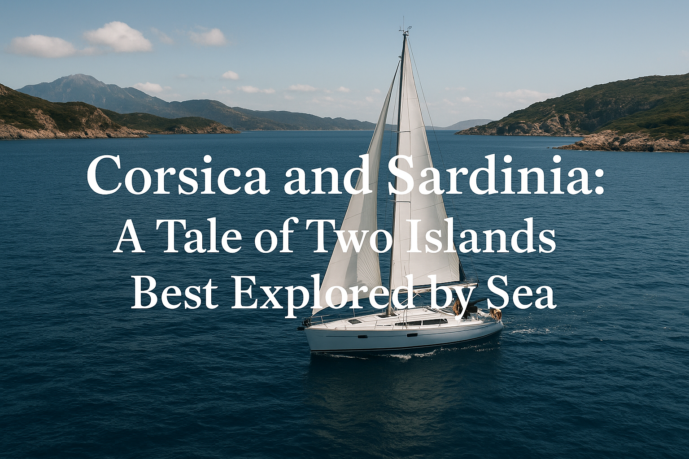
The Crown Jewels of the Tyrrhenian Sea
A Legendary Mediterranean Cruising Ground
In the heart of the Mediterranean, where the Tyrrhenian Sea shimmers under a generous sun, lie two islands of mythic beauty: Corsica and Sardinia. For those who navigate by sail or motor, this region is more than a destination; it is a rite of passage, a legendary cruising ground that whispers promises of adventure on the wind. Though separated by a mere ribbon of sea, these sister islands offer two distinct worlds. Corsica, the rugged French Île de Beauté, rises from the sea with a fierce, mountainous spirit. To its south, Italian Sardinia unfurls with coasts of impossible turquoise and sands as fine as sugar.
To cruise here is to embark on a journey of contrasts, where every day brings a new horizon, a new culture, and a new discovery. It’s a voyage defined by the electric blue of the water against sheer granite cliffs, the scent of wild herbs carried on the breeze, and the timeless freedom that only life on the water can provide.
Why the Sea is Your Best Vantage Point
While both islands can be explored by land, their true character and most profound secrets are revealed only from the deck of a boat. To travel by sea is to unlock a dimension of Corsica and Sardinia that remains hidden from the land-bound visitor. It is the fundamental way to understand their geography and soul.
The primary advantage is access. Your yacht becomes a key to a private Mediterranean, allowing you to drop anchor in hundreds of idyllic coves (calanques), sea caves carved by millennia of wave action, and pristine beaches that are simply inaccessible by road. You can discover quiet bays that you might have all to yourself, even in high season.
There is also the unparalleled freedom. Your itinerary is not dictated by hotel bookings or road maps, but by the wind, the weather, and your own curiosity. Linger an extra day in a beloved anchorage, or set sail for a new island on a whim. The pace is yours to set, allowing for a deep, unhurried connection with the environment.
From the water, the dramatic coastlines are presented in their full, breathtaking scale. The sheer, plunging cliffs of Bonifacio and the vast, sweeping bays of Sardinia are spectacles designed to be appreciated from a sea-level perspective. You witness the landscape as a complete panorama, not as a fragmented view from a clifftop path.
Ultimately, it is about embracing the rhythm of the sea. It is the simple, profound pleasure of waking to the gentle lapping of water against the hull, taking a morning swim in crystal-clear water, and watching the sun set over a new, spectacular anchorage each evening. This daily cycle of discovery and tranquility is the very essence of a sailing holiday in these magnificent islands.
Corsica: The Scented Isle of Beauty
A Wild and Mountainous Paradise
Approaching Corsica from the sea is an olfactory experience before it is a visual one. The first hint of the island is often carried on the breeze: the rich, herbal scent of the maquis. This dense, aromatic scrubland of myrtle, juniper, rockrose, and wild herbs covers the landscape and is the island’s signature perfume. Corsica, known to the French as L’Île de Beauté (The Isle of Beauty), presents a character that is rugged, untamed, and fiercely independent. Less developed and more reserved than its Italian sister to the south, its allure lies in its raw, dramatic nature.
It is, in essence, a mountain in the sea. Formidable granite peaks soar to over 2,700 meters, their slopes plunging directly into the turquoise water below. This verticality defines the coastline, creating a breathtaking succession of dramatic cliffs, deep-cut coves, and sheltered gulfs that make it a sailor’s paradise. Exploring by boat allows you to appreciate this immense scale and wildness in a way that is simply impossible from land.
Must-Visit Cruising Spots in Corsica
From UNESCO-protected reserves to idyllic beaches accessible only by water, Corsica’s coastline is a treasure trove of unforgettable anchorages and sailing passages. Each stop reveals a different facet of the island’s complex personality.
The Scandola Nature Reserve & Calanques de Piana
Sailing along Corsica’s west coast brings you to a UNESCO World Heritage site of staggering beauty. The Scandola Nature Reserve is a geological masterpiece of volcanic origin, where fiery red porphyry cliffs and bizarre rock formations are sculpted by millennia of wind and sea. Further south, the Calanques de Piana offer a similar spectacle of rust-colored granite plunging into a deep blue sea. This is a place for slow, respectful passage, as the area is a protected sanctuary for marine life and birds. Note that anchoring is strictly prohibited within most of the reserve to preserve its pristine state, but the visual journey is an absolute highlight of any Corsican cruise.
The Agriates Desert (Désert des Agriates)
Don’t let the name fool you; this “desert” is a protected expanse of wild maquis and coastline, so named for being uninhabited and untamed. Its true treasures are its beaches, which are considered among the most beautiful in the entire Mediterranean. Accessible only by boat or a rough track, shores like Saleccia and Lotu are arcs of brilliant white sand meeting impossibly clear, turquoise water. Dropping anchor here feels like discovering a secret paradise, a reward reserved almost exclusively for those arriving by sea.
The Lavezzi Islands
Situated in the often-windy Strait of Bonifacio, the Lavezzi archipelago is a chaotic and beautiful scattering of granite islets. The islands are characterized by massive, wind-and-sea-smoothed granite boulders that tumble into the water, creating a maze of small coves and natural swimming pools. It’s a natural playground for boaters, offering idyllic spots for a lunchtime stop. The clear, shallow waters are perfect for snorkeling, and anchoring amidst these ancient stone formations is a truly memorable experience.
Iconic Harbors and Anchorages
Beyond its natural wonders, Corsica’s harbors are destinations in their own right, steeped in history and drama.
- Bonifacio: Perhaps the most spectacular harbor entrance in the Mediterranean. To arrive by sea is to navigate through a narrow, fjord-like channel flanked by towering white limestone cliffs, atop which the ancient citadel is perched precariously. Mooring in the harbor below offers a stunning, unforgettable perspective.
- Calvi & Girolata: In the northwest, Calvi boasts a magnificent Genoese citadel that stands sentinel over a sprawling, protected bay. It’s a vibrant town with a beautiful beachfront. Nearby, the tiny village of Girolata, another UNESCO site, is a picture-perfect vision of rustic charm, accessible only by boat or a long hiking trail, making it a peaceful and exclusive anchorage.
- Porto-Vecchio: Combining a chic, bustling marina with a charming old town, Porto-Vecchio is a gateway to some of Corsica’s most famous beaches. A short sail from the harbor will take you to the stunning bays of Palombaggia and Santa Giulia, renowned for their fine white sand, umbrella pines, and shallow, iridescent waters.
Sardinia: The Emerald Coast and Beyond
A Blend of Glamour and Raw Nature
Crossing the Strait of Bonifacio into Sardinia is to enter another world. While its northern sister is a mountain plunging into the sea, Sardinia is an island that seems to rise from the water to meet you, its coastline defined by wind-sculpted granite, vast sandy bays, and water of an almost impossible turquoise hue. The island’s character is a fascinating duality. On one hand, you have the world-renowned Costa Smeralda, a meticulously crafted paradise of high fashion, exclusive marinas, and vibrant nightlife. Yet, just a short sail away, you can discover a raw, ancient Sardinia, a land of untouched coves, dramatic cliffs, and the mysterious stone towers of the Nuragic civilization that predate Rome.
This blend is what makes Sardinia so compelling for the cruising sailor. You can spend a morning anchored in a secluded bay that feels a million miles from anywhere, and by afternoon, be moored in a chic port, sipping an aperitivo and watching the world go by. The island offers both profound tranquility and sophisticated energy, often within the same day’s sail.
Essential Sardinian Sailing Destinations
The Maddalena Archipelago National Park
Considered by many to be one of the most beautiful sailing grounds on the planet, the Maddalena Archipelago is a protected national park comprising over 60 granite islands and islets. Navigating these waters is a pure delight. The sea between the islands of Budelli, Razzoli, and Santa Maria forms the famed piscine naturali, or natural swimming pools, where the shallow, sandy bottom reflects the sunlight to create a luminous, swimming-pool-blue effect. A key highlight is the legendary Spiaggia Rosa on Budelli, whose pink sands are now protected; you can admire its unique color from your boat, but anchoring and landing are strictly prohibited to preserve its fragile ecosystem. On the nearby island of Caprera, a visit to Cala Coticcio—aptly nicknamed “Tahiti”—is essential, offering a breathtaking anchorage surrounded by pinkish rock and crystalline water.
The Costa Smeralda (The Emerald Coast)
This is the epicenter of Mediterranean glamour, a 35-mile stretch of coastline developed by Prince Karim Aga Khan in the 1960s into a playground for the international elite. The heart of the Costa Smeralda is Porto Cervo, with its world-class marina designed to resemble a traditional fishing village, albeit one filled with superyachts, designer boutiques, and exclusive clubs. While mooring here can be an experience in itself, the true joy for a sailor is exploring the magnificent bays nearby. You can drop anchor in the sheltered waters of Cala di Volpe, surrounded by luxury hotels and lush hillsides, or find a quieter spot in the beautiful coves of Liscia di Vacca and Romazzino. The sailing here is as much about the scenery and the quality of the anchorages as it is about the onshore spectacle.
The Gulf of Orosei
For those seeking a wilder, more adventurous Sardinian experience, the Gulf of Orosei on the island’s central-east coast is a must. This coastline is a dramatic departure from the granite of the north, characterized by towering limestone cliffs that drop vertically into a deep blue sea. This rugged terrain has kept the area largely undeveloped, meaning its most spectacular beaches are accessible only by boat. Here you can explore sea caves like the famous Grotto del Bue Marino or anchor off legendary beaches such as Cala Luna, with its vast caves providing shade at the back of the beach, and the iconic Cala Goloritzé, a UNESCO World Heritage site distinguished by a natural stone arch and a limestone pinnacle soaring above the cove.
The Strait of Bonifacio: A Passage Between Worlds
Navigating the Legendary “Bocche”
Separating the southern tip of Corsica from the northern coast of Sardinia is a channel of water just seven miles wide: the Strait of Bonifacio. Known to Italians as the Bocche di Bonifacio, this legendary passage is more than just a geographical feature on a nautical chart; it is a rite of passage for sailors in the region and a bridge between two distinct Mediterranean worlds.
The strait is renowned for its demanding sailing conditions. The topography of the two large islands creates a powerful funnel effect, accelerating winds that sweep through the channel. The Mistral from the northwest and the Sirocco from the southeast can create steep seas and strong currents, making for a thrilling and sometimes challenging crossing. For the experienced mariner, navigating the “Bocche” is a rewarding test of skill, a dynamic stretch of water that commands respect and careful planning.
Yet, the true significance of this crossing is symbolic. To sail across the strait is to experience a tangible cultural shift in real-time. As the monumental limestone cliffs of Bonifacio recede, the wind-sculpted granite shores of Sardinia rise to greet you. The language heard over the VHF radio transitions from French to Italian. The very character of the coastline changes, from Corsica’s vertical, mountainous drama to Sardinia’s softer contours and turquoise shallows. This short voyage is a passage between nations, identities, and atmospheres—a moment where the unique soul of each island is felt most profoundly, all from the deck of your boat.
Sister Islands, Different Souls: A Comparison for the Cruiser
Landscape and Topography
From your deck, the visual distinction between the islands is immediate and profound. Corsica presents a profile of raw, vertical drama. It is a true “mountain in the sea,” where jagged, green-clad peaks plunge directly into the deep blue water. Its coastline is a study in rugged grandeur, carved into formidable cliffs, deep inlets, and wild, untamed headlands. The impression is one of imposing, ancient beauty.
Sardinia, while also possessing a wild interior, reveals a softer coastal character to the sailor. It is renowned for its countless bays lined with brilliant white and golden sand, gently sloping into shallows of an almost unbelievable turquoise. The landscape here is defined by immense, wind-sculpted granite boulders, smooth and sculptural, which tumble into the sea, framing some of the Mediterranean’s most celebrated beaches.
Culture and Vibe
Dropping anchor in Corsica feels like stepping into a land with a deep, resilient soul. The culture is fiercely Corsican first, and French second. There is a palpable sense of independence and a rustic, unpretentious charm that permeates the island’s villages and towns. The atmosphere is less about overt display and more about an authentic connection to the dramatic landscape and a history of proud resistance.
Sailing across the strait to Sardinia is to arrive in a world that is unmistakably Italian. The vibe can shift dramatically from one bay to the next. You’ll find the high glamour and sophisticated energy of the Costa Smeralda, with its superyachts and designer boutiques, existing alongside a deeply ingrained, laid-back beach culture. Further inland and along less-developed coasts, the island’s ancient past is ever-present in the form of thousands of mysterious Nuragic stone structures, adding a layer of profound history to the relaxed Italian pace of life.
Onshore Experience for Boaters
The differences extend to the plate and the port. Corsican cuisine is robust and born of the mountains. You’ll discover exceptional cured meats like figatellu and coppa, strong sheep and goat cheeses like brocciu, and a surprising reliance on chestnuts in everything from flour to beer. It is hearty, flavorful, and deeply traditional.
Sardinian gastronomy, by contrast, sings of the sea and the pasture. Expect exquisite seafood pastas like fregola con arselle, the celebratory roast suckling pig known as porceddu, and crisp, aromatic white wines, particularly the local Vermentino. It is a perfect culinary companion to sun-drenched days and warm evenings.
This duality is also reflected in the harbors. Corsica’s most memorable ports are historic, fortified citadel towns like Bonifacio and Calvi, where you tie up beneath ancient walls. In Sardinia, particularly in the northeast, you are more likely to encounter purpose-built luxury marinas like Porto Cervo, designed for the international yachting set, alongside traditional, pastel-hued fishing villages that offer a more understated welcome.
Planning Your Corsica-Sardinia Sailing Adventure
Turning the dream of a Corsican-Sardinian sailing trip into reality involves a few key decisions. From choosing the right time of year to selecting the perfect vessel, thoughtful planning is the first step toward an unforgettable journey. Here’s a practical guide to help you cast off the lines.
Best Time to Go
The Mediterranean sailing season is generous, but timing your visit can significantly shape your experience. Each period offers a different character, from tranquil solitude to vibrant summer energy.
- Shoulder Seasons (May-June & September): For many seasoned sailors, these are the golden months. The weather is typically warm and stable, with pleasant sea temperatures ideal for swimming. The fierce summer crowds have yet to arrive or have already departed, meaning more space in popular anchorages and harbors. You’ll find a more relaxed atmosphere onshore, and the landscape, particularly in late spring, is lush and bursting with color.
- High Season (July-August): This is the heart of the Mediterranean summer. Expect long, hot, sunny days and a lively, bustling atmosphere both on the water and in port towns. The winds are often lighter, which can be ideal for leisurely cruising. Be prepared for premium pricing and crowded anchorages, especially in famous spots like the Maddalena Archipelago and Bonifacio. Booking marinas and restaurants well in advance is highly recommended.
Chartering Your Yacht
Accessing this paradise is easier than ever, with a range of charter options to suit every level of experience and comfort. The region is well-served by professional charter companies based in key ports on both islands.
Your choice of charter will define the style of your holiday:
- Bareboat Charter: For qualified and experienced sailors, a bareboat charter offers the ultimate freedom. You take command of the vessel, set your own pace, and chart your own course. It requires the appropriate sailing certifications and a deep confidence in your crew’s abilities.
- Skippered Charter: This is an excellent middle ground, providing a professional skipper who handles the sailing and takes responsibility for the yacht. It’s perfect for those who can sail but prefer to relax, or for newcomers who want a safe introduction to the area. A skipper’s local knowledge is invaluable for finding the best-secluded anchorages and navigating tricky passages.
- Crewed Charter: For the pinnacle of relaxation and luxury, a fully-crewed yacht includes a captain, a chef, and sometimes additional crew. Every detail is managed for you, from navigation to gourmet meals, allowing you to simply immerse yourself in the beauty of your surroundings.
Primary charter bases are strategically located for easy access to the best cruising grounds. In Corsica, look to ports like Ajaccio, Propriano, and Calvi. In Sardinia, the most popular starting points are on the northeast coast, including Olbia, Portisco, and Cannigione, which serve as perfect gateways to the Maddalena and Emerald Coast.
Sample One-Week Itinerary: The Best of Both Worlds
A week is just enough time to get a tantalizing taste of both islands. This suggested itinerary, starting and ending in Sardinia, is designed to be a source of inspiration, a flexible outline that you can adapt to the wind, weather, and your own sense of discovery.
- Days 1-2: The Maddalena Archipelago. After departing from your base in northern Sardinia (e.g., Cannigione), spend the first two days immersing yourself in the natural wonder of the Maddalena Archipelago. Discover the turquoise “piscine naturali” and find a quiet anchorage near Caprera or Spargi.
- Day 3: The Lavezzi Crossing. Enjoy a morning sail north into the Strait of Bonifacio. Your destination is the Lavezzi Islands, a stunning granite archipelago. Drop anchor for lunch and a memorable swim amidst the giant, smooth boulders before continuing your short journey to Corsica.
- Day 4: The Arrival in Bonifacio. Experience one of the most dramatic arrivals in the world as you navigate the fjord-like entrance into Bonifacio’s harbor. Spend the afternoon exploring the medieval citadel perched atop the limestone cliffs and enjoy dinner with a view.
- Day 5: The Bays of Southern Corsica. Sail east from Bonifacio along Corsica’s southern coast, known for its idyllic beaches. Drop anchor in the perfectly sheltered, circular bay of Rondinara or the glamorous bay of Santa Giulia for an afternoon of swimming and relaxing on deck.
- Day 6: A Leisurely Return South. Begin your journey back towards Sardinia. This is a day for pure sailing, letting the prevailing winds guide you. It’s the perfect opportunity to stop at a secluded cove you spotted on the way up or simply enjoy the feeling of being at sea, far from any shore.
- Day 7: Return to Base. Enjoy one last swim in the clear Sardinian water before a short, final sail back to your charter base. Arrive in the late afternoon, filled with memories of two distinct islands and the beautiful sea that connects them.
An Unforgettable Voyage Awaits
More Than a Holiday, an Exploration
To sail between Corsica and Sardinia is to journey between two distinct worlds. Separated by the narrow, windswept Strait of Bonifacio, these sister islands present a study in contrasts, a duality that captivates the soul of any mariner. One day you are navigating the rugged, vertical coast of a fiercely independent French island; the next, you are dropping anchor in the impossibly turquoise waters of a glamorous Italian archipelago. This is the essence of a cruising holiday here—it is less a simple vacation and more a genuine exploration. The true character of these islands, their most secluded beaches, dramatic sea caves, and breathtaking perspectives, is reserved for those who approach from the sea. Only from the deck of a boat can you fully grasp the monumental scale of Bonifacio’s cliffs or find your own private slice of paradise in the Maddalena’s labyrinthine coves.
The Enduring Call of the Tyrrhenian Sea
The memories of a voyage here linger long after you have returned to shore, imprinted on the senses. It is the wild, herbal scent of the Corsican maquis carried on the breeze miles out to sea. It is the astonishing spectrum of blues and greens in the waters of the Costa Smeralda, a sight no photograph can truly capture. It is the taste of a crisp Vermentino wine paired with fresh seafood in a Sardinian trattoria, or the rich, savory flavor of Corsican charcuterie enjoyed in a secluded anchorage. Above all, it is the profound feeling of freedom—the simple rhythm of the waves, the gentle flap of a sail, and the promise of a new horizon each morning. This tale of two islands is not one to be merely read about; it is a story waiting for you to live. The lines are ready to be cast off, and the Tyrrhenian Sea is calling.