Giants of the Ice: A Sailor’s Guide to the Whales, Seals, and Penguins of the Antarctic Peninsula
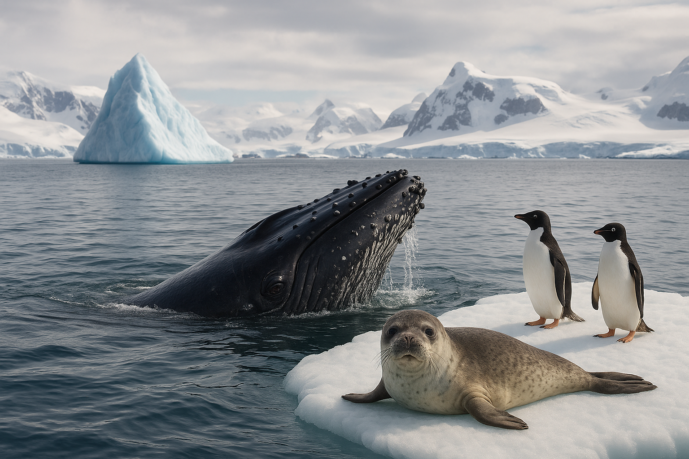
The Antarctic Peninsula: A Realm of Ice and Life
At first glance, the Antarctic Peninsula is a world of stark, monochromatic beauty—a fortress of ice, rock, and wind. Yet, for the sailor who ventures into its protected channels and bays, this seemingly barren landscape reveals itself to be one of the most vibrant and concentrated wildlife destinations on the planet. Understanding the forces that drive this explosion of life is the first step to truly appreciating the spectacle that unfolds before your eyes.
Why This Frozen World Teems with Wildlife
The paradox of Antarctica is that its frigid waters are among the most productive on Earth. This abundance isn’t an accident; it’s the result of a powerful combination of oceanography, biology, and celestial mechanics that creates a perfect, albeit brief, feast for all who gather here.
- The Antarctic Convergence: This is not a line on a map but a dynamic, circumpolar oceanic boundary where the cold, dense waters of the Antarctic sink beneath the warmer, sub-Antarctic waters. This process creates a massive upwelling, dredging nutrient-rich deep water to the surface. These nutrients, particularly silicates and nitrates, are the fertilizer for the entire ecosystem.
- Krill: The Heart of the Food Web: Fueled by the sun and the upwelled nutrients, massive blooms of phytoplankton (microscopic algae) cloud the water. This provides a feast for Antarctic krill, tiny, shrimp-like crustaceans that swarm in unimaginable numbers. These krill are the central pillar of the Antarctic food web, converting the sun’s energy into a protein-rich food source for nearly every larger animal you will encounter, from the smallest penguin to the largest blue whale.
- The 24-Hour Summer Sun: During the austral summer, the sun barely dips below the horizon, bathing the Peninsula in continuous daylight. This constant energy supercharges the growth of phytoplankton, creating a short, intense period of extreme biological productivity that the entire ecosystem is timed to exploit.
The Sailor’s Unrivaled Vantage Point
While large cruise ships can offer a view of Antarctica, the sailor on a smaller expedition vessel or yacht gains a far more intimate perspective. The ability to navigate with agility and get closer to the action is what transforms a trip into a deep, personal encounter with the wild.
- Access to Remote Sanctuaries: Smaller vessels can navigate the narrow, ice-choked channels and anchor in secluded coves that are inaccessible to larger ships. These are often the very places where seals haul out on ice floes, penguin colonies thrive on protected shores, and whales come to feed in calm, krill-rich waters.
- A Water-Level Perspective: The experience of exploring in a Zodiac inflatable boat is unparalleled. Gliding silently at water level, you are no longer a spectator looking down from a high deck but a participant in the environment. You can meet a curious leopard seal at eye level, feel the spray from a porpoising penguin, and hear the deep, resonant blow of a humpback whale just meters away.
- Immersion in Silence and Scale: Away from the constant hum of a large vessel, the true soundscape of Antarctica emerges. It is a world of profound silence, punctuated by the crackle of brash ice against the hull, the thunderous crash of a calving glacier, and the calls of distant wildlife. Surrounded by towering icebergs and vast, empty horizons, you gain a humbling sense of scale and a feeling of genuine immersion in one of the last great wildernesses on Earth.
The Cetacean Giants: Whales of the Southern Ocean
The first sign is often a puff of mist hanging in the frigid air, a distant exhalation that betrays the presence of something immense beneath the surface. For a sailor in Antarctica, these are the moments that define the journey. The waters of the Southern Ocean, rich with krill, attract some of the largest and most magnificent creatures on Earth. Observing them from the water level, surrounded by the stark beauty of the ice, is an experience that connects you directly to the raw power of the natural world.
Humpback Whales: The Acrobats of the Antarctic
Perhaps the most charismatic of the great whales, the Humpback is a star performer that seems to revel in its own power and grace. Their summer feeding season in Antarctica provides some of the most spectacular wildlife encounters imaginable. They are a photographer’s dream and a naturalist’s delight.
- How to Identify: Look for their impossibly long, white pectoral fins, which can be up to a third of their body length. Their heads are covered in bumpy knobs called tubercles, and their most defining feature is the tail fluke. The black-and-white pattern on the underside of the fluke is unique to each individual, serving as a natural fingerprint.
- Behavior to Watch For: Humpbacks are famous for their surface activity. A full-body breach, where a 40-ton animal launches itself out of the water, is an unforgettable sight. You may also witness powerful tail-slapping, pectoral fin slapping, or lunge-feeding, where they surge through dense swarms of krill. The most sophisticated behavior is bubble-net feeding, a cooperative strategy where a group of whales blows a circle of bubbles to trap fish and krill before surfacing together with mouths agape.
- Photography Tip: To freeze the explosive action of a breach, use a fast shutter speed—1/1000s or faster is a good starting point. A clear, sharp shot of the tail fluke is invaluable; organizations like Happywhale use these images to track individual whales across the globe, contributing directly to scientific research.
Minke Whales: The Elusive and Swift
The Minke is the most common baleen whale in the Southern Ocean, yet it is often one of the most challenging to observe well. They are smaller, faster, and far more discreet than their Humpback cousins, offering fleeting but rewarding glimpses to the patient sailor.
- How to Identify: Minkes have a sleek, streamlined body and a sharply pointed head. Their dorsal fin is small and curved, and their blow is low and bushy, often difficult to spot in choppy seas. An encounter is typically a quick look at a dark back arching smoothly through the water before it disappears.
- Behavior to Watch For: Their signature move is a quick series of breaths followed by a long, deep dive, often for several minutes. While they can be curious and may briefly approach a vessel or zodiac, they rarely linger, making every sighting a special moment.
- Photography Tip: Preparation is everything. These whales can surface anywhere, anytime. Keep a camera with a long zoom lens (300mm or more) ready to go. You won’t have time to change lenses, so anticipation is your greatest asset in capturing these shy giants.
Orcas (Killer Whales): The Apex Predators
The presence of Orcas changes the energy of the water. Their intelligence, power, and unmistakable appearance command immediate respect. Seeing a pod of these apex predators moving with purpose through the ice-choked channels is a primal and thrilling experience. Their black-and-white forms, cutting through the blue-white world of the Antarctic, are a vision of wild perfection.
- How to Identify: Their iconic black-and-white coloration and tall, black dorsal fin are unmistakable. The fins of adult males can be remarkably tall, reaching up to six feet in height. They travel in close-knit family groups, or pods, and their powerful presence is felt long before they are close.
- Behavior to Watch For: Look for spy-hopping, where an Orca pokes its head vertically out of the water to survey its surroundings. Their cooperative hunting strategies are legendary. The thrill of identifying different ecotypes adds another layer to the encounter. You might see the larger Type A Orcas, which hunt whales, or the smaller Type B Orcas, famous for their “wave washing” technique, where they work as a team to create a wave that washes a resting seal off an ice floe.
- Photography Tip: A polarizing filter is an essential tool. It will dramatically reduce the glare from the water’s surface and from the Orcas’ wet skin, making their black-and-white markings much more vibrant and defined. Rather than just a single animal, try to capture the interactions within the pod to tell the story of their complex social lives.
The True Leviathans: Fin and Blue Whale Sightings
Sighting a Fin or Blue Whale is the Antarctic equivalent of winning the lottery. These are not just whales; they are forces of nature, the largest animals ever to have lived on our planet. Encounters are rare, profound, and represent the absolute highlight of any voyage to the Southern Ocean. Their sheer scale is difficult to comprehend until you see it for yourself, a humbling reminder of the grandeur of the wild.
- How to Identify: The primary identifier is their colossal size. The Fin Whale, the “greyhound of the sea,” is long, slender, and incredibly fast. The Blue Whale is simply the biggest, a blue-grey behemoth of unimaginable proportions. Their blows are the most telling sign—powerful, vertical columns of spray that can rise over 30 feet into the air and be spotted from many miles away.
- Behavior to Watch For: The behavior is the spectacle. Simply witnessing a sliver of their massive back gliding through the water, followed by a small dorsal fin that seems impossibly far from where their head surfaced, is the entire event. The sheer volume of water they displace and the sound of their thunderous exhalation are unforgettable.
- Photography Tip: The greatest challenge and goal is to convey scale. An image of a Blue Whale alone in the ocean fails to communicate its size. Frame your shot to include a reference point—a zodiac, your ship, or a massive iceberg in the background. This context is crucial for giving a sense of their incredible, world-dwarfing dimensions.
Life on the Edge: The Seals of Antarctica
While whales command the open water and penguins dominate the shorelines, the ice floes and rocky coasts belong to the pinnipeds. These seals are not just passive inhabitants of the ice; they are masters of this challenging environment, each species having carved out a unique niche. For the sailor and photographer, they offer incredible encounters, from serene portraits on floating ice to dramatic displays of predatory power.
Crabeater Seals: The World’s Most Abundant Seal
Despite their name, Crabeater Seals are the Antarctic’s ultimate krill specialists. You will almost certainly encounter them, often in great numbers, hauled out on drifting pack ice. How to Identify: Look for a slender, silvery-blonde body, often marked with long parallel scars along their sides—lasting evidence of narrow escapes from their primary predator, the Leopard Seal. Their faces are distinctly dog-like and often seem to be smiling. Interesting Fact: Their name is a classic misnomer. They don’t eat crabs, but instead possess unique, multi-lobed teeth that act as a perfect sieve, allowing them to gulp mouthfuls of seawater and strain out the tiny krill that form the bulk of their diet. Photography Tip: Crabeaters are typically relaxed on their icy thrones, presenting a fantastic opportunity for detailed portraits. Use the cool blues and stark whites of the ice floe to create a beautiful, contrasting background that makes your subject stand out. Focus on their scarred hides to tell a story of survival.
Leopard Seals: The Formidable Hunter
To see a Leopard Seal is to witness the raw, untamed power of the Antarctic. These are not docile sunbathers; they are formidable apex predators, second only to the Orca. Their presence commands immediate respect and awe. How to Identify: They are unmistakable. A long, serpentine body, an immense head reminiscent of a reptile, and a powerful jaw that opens surprisingly wide define this hunter. Their coat is a dappled grey and black, providing perfect camouflage in the water. Behavior to Watch For: You’ll often find them patrolling the edges of ice floes near penguin colonies, their heads silently breaking the surface. They are incredibly curious and may approach zodiacs, examining them with an unnerving intelligence. Observing one hunt—whether it’s a penguin, a seal pup, or even krill—is a truly primal and unforgettable spectacle. Photography Tip: Safety is paramount, so a long zoom lens is essential. By shooting from the low vantage point of a zodiac, you can create an incredibly powerful and dramatic portrait that emphasizes their dominance. Aim to capture the intensity in their eyes or the sheer size of their head and jaws.
Weddell Seals: The Deep-diving Champions
Where the Leopard Seal is fearsome, the Weddell Seal is the picture of placid contentment. These deep-diving masters are often found near the shore on fast ice or sheltered beaches. How to Identify: Look for a very plump, robust body, often a mottled grey and black, with a disproportionately small and endearing head. Their large, dark eyes and cat-like face give them a gentle expression. Behavior to Watch For: Weddell Seals are true ice specialists, famous for using their canine and incisor teeth to rasp away at the ice to maintain breathing holes throughout the winter. Listen closely, as their underwater vocalizations are extraordinary—a series of eerie, sci-fi-like trills and chirps that carry for miles beneath the ice. Photography Tip: Their docile nature on land makes them fantastic subjects for close-up photography. You can often get relatively near without disturbing them (while respecting distance guidelines). Focus on their expressive faces, especially their whiskers, which are often beautifully coated in a delicate layer of frost.
Antarctic Fur Seals: The Feisty Climbers
Unlike the “true” seals mentioned above, Antarctic Fur Seals are otariids, or “eared seals.” This distinction is immediately apparent in their behavior and appearance. How to Identify: They have a thick, brown coat of fur (once prized by sealers), visible external ear flaps, and a more pointed, dog-like snout. They are also far more mobile on land, using their large front flippers to “walk” and climb with surprising agility. Behavior to Watch For: Found on subantarctic islands and the northern tip of the Peninsula, Fur Seals are highly social and territorial. Breeding beaches are a chaotic scene of bellowing males defending harems and pups playing in the surf. Their agility on steep, rocky shores is impressive to watch. Photography Tip: These seals are dynamic. Capture their energetic movements as they navigate the rocky coastline or interact within the bustling colony. Because they can be aggressive and move quickly, it is crucial to maintain a safe distance and use a telephoto lens to capture the action without causing a disturbance.
The Heart of the Continent: Penguin Supercolonies
While the giants of the sea command attention, it is often the bustling, charismatic penguin colonies that capture the heart. These are not just scattered groups of birds; they are sprawling cities of life, teeming with drama, comedy, and a relentless will to survive. For a sailor and photographer, landing near a supercolony is to step into the vibrant core of Antarctic life.
Adélie Penguins: The Quintessential Antarctic Resident
If you were to ask a child to draw a penguin, they would likely draw an Adélie. With their immaculate black-and-white tuxedo, they are the archetypal Antarctic bird. Their most defining feature, visible up close, is a sharp white ring around the eye, giving them a look of intense focus or perpetual surprise. They are true ice penguins, rarely found north of the Antarctic Peninsula.
Observing an Adélie colony is pure entertainment. Their society runs on pebbles, which they use to build slightly elevated nests to protect their eggs from meltwater. This leads to constant drama, as penguins will brazenly steal prized pebbles from their neighbors’ nests the moment a back is turned. You’ll witness them commuting from the sea to their nests along well-trodden paths known as “penguin highways” and, to save energy, dropping to their bellies to toboggan across the snow with surprising speed.
Photography Tip: To truly capture the character of these small penguins, get your camera as low to the ground as possible. An eye-level perspective creates a far more intimate and engaging portrait. Their waddling walk and sudden squabbles are fleeting moments, so use a continuous shooting mode (burst mode) to ensure you capture the peak of the action.
Gentoo Penguins: The Curious and Colorful
Easily distinguished from their cousins, Gentoo penguins bring a dash of color to the ice. Look for the elegant white stripe that extends over their heads like a bonnet and, most strikingly, their bright, reddish-orange bill. They are the third-largest penguin species and are known for their inquisitive and sometimes skittish nature.
Gentoos are the speedsters of the penguin world, capable of reaching incredible speeds underwater. From the zodiac, you can often see them “porpoising”—leaping rhythmically in and out of the water as they travel. Witnessing their explosive power as they launch themselves from the sea, landing perfectly on their feet on a high ice floe or rocky ledge, is a moment of pure admiration for their strength. Onshore, you’ll find them diligently tending to their famously fluffy, grey-brown chicks.
Photography Tip: That vibrant orange beak makes for a fantastic focal point. Isolate it with a shallow depth of field for a striking portrait. To tell a bigger story, use a wider-angle lens to place a Gentoo within its breathtaking environment. A shot of a lone penguin against a backdrop of colossal blue icebergs or jagged mountains powerfully conveys the scale and beauty of their home.
Chinstrap Penguins: The Noisy Mountaineers
You’ll know a Chinstrap penguin the moment you see one. They are named for the unmistakable, fine black line that runs from ear to ear just under their chin, as if securing a tiny helmet. This sharp marking gives them a determined, almost military, appearance. They are the most abundant penguin in the Antarctic and are masters of the challenging coastal terrain.
Unlike Adélies who prefer flat ground, Chinstraps are audacious climbers, establishing their colonies on incredibly steep and seemingly inaccessible rocky slopes and headlands. Watching them navigate these sheer cliffs with practiced ease is a testament to their hardiness. Their colonies are an overwhelming sensory experience. Long before you see them, you will hear them—a deafening, high-pitched cacophony of sound from tens of thousands of birds that blankets the landscape. As you get closer, the sharp, pungent smell of guano becomes an undeniable presence. It is a raw, intense, and unforgettable immersion into the wild heart of Antarctica.
Photography Tip: The dramatic settings of Chinstrap colonies are a gift to photographers. Use a telephoto lens (200mm and above) to isolate individuals or small family groups against the textured, rocky backdrops. This compresses the perspective and emphasizes the relationship between the bird and its formidable environment, creating a powerful narrative of life on the edge.
The Sailor’s Code: A Guide to Responsible Viewing
To sail in Antarctic waters is a profound privilege, one that comes with an equally profound responsibility. As visitors, we are temporary guests in one of the planet’s last true wildernesses. Adhering to a strict code of conduct is not just a guideline; it is our pact with this pristine environment, ensuring that its wonders remain for generations to come. This code is about more than just rules; it’s about adopting a mindset of respect and stewardship.
Navigating with Respect: IAATO Guidelines
The International Association of Antarctica Tour Operators (IAATO) has established a comprehensive set of guidelines to ensure that tourism is conducted in a safe and environmentally responsible manner. Your expedition team is thoroughly trained in these protocols, and following their lead is paramount.
- The Golden Rule of Distance: The foundation of respectful wildlife viewing is giving animals their space. The general rule is to maintain a distance of at least 5 meters (about 16 feet) from penguins and nesting birds, and 15 meters (about 50 feet) from seals. If an animal approaches you, stand still and let it pass.
- On the Water: When observing whales from a zodiac or ship, approaches must be slow, cautious, and parallel to the animal’s direction of travel. Sudden changes in speed or direction can stress them. It is absolutely forbidden to cut off a whale’s path or, most critically, to separate a mother from her calf.
- On Land: Wildlife always has the right-of-way. If you are on a path and penguins are using it as a “highway,” you must step aside and wait for them to pass. Stick to marked paths to avoid trampling delicate vegetation or disturbing nesting sites. The principle of “no-impact” landings means you take nothing but photographs and leave nothing but footprints—and even those, carefully.
Protecting the Pristine: Biosecurity Protocols
The Antarctic continent has evolved in near-total isolation, making its ecosystem incredibly fragile and highly susceptible to foreign contaminants. Preventing the introduction of non-native species, seeds, or pathogens is a top priority for every visitor.
- Why it Matters: A single seed from your boot tread or a microbe from another continent could establish itself and disrupt the local food web in unpredictable ways. Protecting this pristine environment from biological invasion is a core responsibility.
- Practical Steps: Before your first landing and after every subsequent one, your expedition team will guide you through a strict biosecurity process. This involves thoroughly inspecting and cleaning your outer gear, particularly boots, trouser cuffs, and camera bags. You will often use a disinfectant foot bath and brushes to scrub any soil or organic matter from your boots and tripods. It’s a small, simple action with immense importance.
Become a Citizen Scientist
Your journey to the Antarctic Peninsula is also a unique opportunity to contribute to the scientific understanding of this vital region. The observations and data collected by visitors can be invaluable to researchers studying climate change, animal populations, and marine biology.
- How Your Photos Can Help: That perfect photograph of a humpback’s tail fluke is more than just a beautiful image. The unique black-and-white pattern on a humpback’s fluke is its fingerprint. By submitting your clear fluke shots to platforms like Happywhale.org, you can help scientists track individual whales, their migration patterns, and their life histories.
- The Value of Observation: You have a front-row seat to the rhythms of Antarctic life. If you observe anything unusual—a species not common to the area, a whale entanglement, or peculiar animal behavior—report it to your expedition leader. Your detailed observations provide crucial data points for the scientific community monitoring the health of the Southern Ocean.
A Photographer’s Paradise: Capturing the Ice
Antarctica is a realm of sublime and minimalist beauty, a landscape of infinite shades of white and blue that challenges and rewards the photographer in equal measure. The sheer scale and unique quality of light can be overwhelming. Success lies not just in what you see, but in understanding how to capture it. Here are some practical considerations for bringing home images that do justice to this magnificent environment.
Essential Gear for the Antarctic Shooter
While any camera can take a picture, the Antarctic environment favors equipment that is both robust and versatile. Preparing your kit thoughtfully will allow you to focus on the moments that matter.
- Camera and Lenses: A camera body with good weather-sealing provides invaluable peace of mind against sea spray and light snow. For lenses, a dual approach is best. A telephoto zoom, such as a 100-400mm or 150-600mm, is indispensable for capturing frame-filling portraits of whales and distant penguins without disturbing them. Complement this with a wide-angle lens, like a 16-35mm or 24-70mm, to convey the monumental scale of the icebergs and mountain ranges.
- Key Accessories: The cold is notoriously harsh on electronics. Pack at least two or three extra batteries and keep them warm. A circular polarizing filter is essential; it reduces the intense glare from the water and ice, deepens the blue of the sky, and saturates colors. Finally, a high-quality waterproof dry bag is non-negotiable for every zodiac excursion to protect your gear from splashes and the elements.
Mastering the Challenging Light
The Antarctic light is unlike anywhere else on Earth. It is bright, reflective, and during the summer, it lasts all day. Learning to control this light is the key to creating stunning images rather than washed-out snapshots.
- Exposing for Snow and Ice: Your camera’s light meter is easily fooled by vast, bright scenes of snow and ice, often resulting in underexposed, grey-looking images. To counteract this, learn to trust your camera’s histogram to ensure you are not losing detail. As a general rule, you will need to dial in positive exposure compensation (+1 to +2 stops) to render the white landscapes as bright and clean as your eye sees them.
- The 24-Hour Golden Hour: One of the greatest gifts of the polar summer is the low angle of the sun. For hours on end, the landscape is bathed in the soft, warm, dramatic light that photographers typically only get for a few minutes at sunrise and sunset. Take full advantage of this “perpetual golden hour” to add mood and dimension to your landscapes and wildlife shots.
Composing Your Antarctic Masterpiece
In a place of such grandeur, thoughtful composition is what separates a simple record shot from a compelling photograph. The goal is to translate the feeling of being there into a two-dimensional image.
- Create a Sense of Scale: To communicate the true immensity of an iceberg or glacier, intentionally include a reference point. A zodiac, your expedition ship, or even a fellow traveler in the frame can instantly transform an abstract shape of ice into a monumental structure, giving the viewer a grasp of its epic proportions.
- Look for Leading Lines: Guide the viewer’s eye through your image by using the powerful natural lines within the landscape. The well-trodden path of a penguin highway up a snowy hill, the sweeping curve of a glacial crevasse, or the sharp, graphic edge of an ice floe can create a potent sense of depth and direction.
- Get to Eye Level: For wildlife photography, resist the instinct to shoot down from your full height. By getting your camera low—ideally to the animal’s eye level—you create a far more intimate and engaging portrait. This perspective invites the viewer into the subject’s world, fostering a connection that a top-down view rarely achieves.
Protecting Your Equipment in the Cold
The primary threats to your gear are not just the cold itself, but the transition between the frigid outdoors and the warm, humid interior of the ship. A few simple habits can prevent costly damage.
- The Condensation Battle: Before you head inside after a landing or zodiac cruise, place your camera and lenses inside a sealed plastic bag or your waterproof dry bag. Do not open it for at least an hour. This allows the equipment to warm up gradually to room temperature, preventing damaging moisture from condensing on and, more importantly, inside the cold glass and electronics.
- Battery Management: Cold temperatures can cut your battery’s effective life in half. The solution is to keep them warm. Store your spare batteries in an inner pocket of your jacket, close to your body heat. When the battery in your camera dies, swap it with a warm one and place the cold battery in your warm pocket; it will often recover some of its charge as it warms up.