O sabor da Croácia: Um itinerário de navegação para os amantes da comida e do vinho ao longo da costa da Dalmácia
The Allure of the Adriatic: Why Sail Croatia for its Food and Wine?
The Perfect Pairing: Sailing and Gastronomy
To sail the Dalmatian Coast is to unlock a world unavailable to the land-bound traveler. It’s a journey defined by freedom, where the day’s destination is chosen not by roads, but by the wind and your appetite. Aboard your own vessel, you can glide past the crowded ferries and discover the Croatia of postcards and dreams: the silent, turquoise coves, the family-run waterfront restaurants accessible only by boat, and the ancient vineyards that tumble down to the sea’s edge. The rhythm of sailing—the gentle lapping of waves against the hull, the warmth of the sun on the deck—creates the perfect state of mind to truly savor a meal.
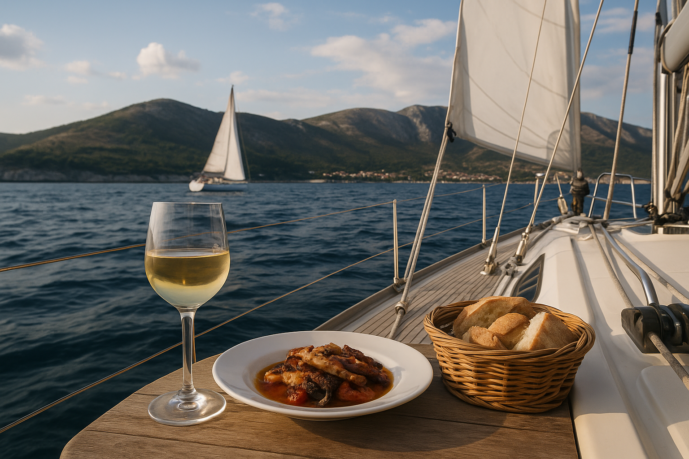
Imagine this: after a morning of sailing, the skipper drops anchor in a secluded bay on an uninhabited islet. The water is a startling shade of aquamarine, and the air is thick with the scent of pine and wild rosemary. While you take a swim, a simple lunch is prepared on board—freshly caught sea bream, glistening with local olive oil, sizzles on a small grill. Paired with a chilled glass of Pošip wine and crusty bread, this meal is not just food; it is an experience, an indelible memory of time and place. This is the essence of a culinary sailing trip, where the journey from one island to the next becomes a gastronomic progression, each new harbor promising a different flavor, a local specialty, and a new story to uncover.
A Land of Terroir: From Sun-Drenched Grapes to Sea-Salted Lamb
Dalmatian cuisine is a rich tapestry woven from threads of history and geography. Its foundations are Mediterranean—olive oil, fresh fish, seasonal vegetables, and fragrant herbs. Yet, centuries of influence have added layers of complexity. You’ll find the elegance of Venetian Italy in its risottos and pastas, a hint of Austrian heartiness in its pastries, and echoes of Ottoman spice in certain slow-cooked meat dishes. This blend has created a culinary identity that is distinctly Croatian: honest, fresh, and deeply connected to the land.
The French concept of terroir—the way a region’s specific climate, soil, and environment shape the character of its food and wine—is profoundly felt here. It’s in the powerful red wines made from Plavac Mali grapes, which struggle for life in the rocky, sun-drenched soil of the Pelješac peninsula, yielding intense, concentrated flavors. You taste it in the briny freshness of oysters from the Bay of Ston, nourished by the unique mix of salt and fresh water. It’s even present in the celebrated lamb from islands like Brač or Pag, whose meat is subtly seasoned by the salty air and the aromatic herbs on which the animals graze. In Dalmatia, every meal is a direct expression of the sun, the sea, and the stone.
Planning Your Culinary Sailing Adventure
A successful gastronomic journey requires a bit of forethought. The right boat, the perfect season, and a well-stocked galley are the essential ingredients for an unforgettable voyage. Here’s how to lay the groundwork for your Croatian culinary sailing trip.
Chartering Your Vessel: Skippered vs. Bareboat
Your first major decision is who will be at the helm. This choice shapes the entire character of your trip, from navigation to dining discoveries.
- Skippered Charter: For those new to sailing or who simply wish to relax and focus on the food and wine, hiring a local skipper is an invaluable asset. A skipper handles all the navigation, mooring, and safety, leaving you free to enjoy the scenery. More importantly, they are your local guide, possessing insider knowledge of the best-secluded coves for a swim, the quietest anchorages, and, crucially, which family-run konobas serve the most authentic food. The trade-off is a higher cost and slightly less privacy, but the access and peace of mind are often worth it.
- Bareboat Charter: If you are an experienced and certified sailor, a bareboat charter offers the ultimate freedom and privacy. You set your own pace and itinerary completely. However, you are responsible for everything from passage planning and navigating the sometimes-tricky local winds to safely anchoring and mooring in busy harbors. You’ll need the appropriate sailing licenses (such as an ICC) and a solid understanding of Mediterranean mooring techniques.
When it comes to the vessel itself, the main choice is between a traditional monohull and a spacious catamaran. A monohull provides a classic, responsive sailing experience that purists love. A catamaran, on the other hand, offers superior stability (less rocking at anchor), a much larger deck and living space, and a shallow draft, making it easier to get closer to shore in quiet bays. For a trip centered around comfort, entertaining, and leisurely lunches on deck, a catamaran is often the preferred choice.
The Best Time to Go for Foodies
While Croatia is beautiful all summer, timing your visit can significantly enhance the culinary experience.
The shoulder seasons—May to June and September to October—are widely considered the ideal time for a gastronomic tour. The weather is warm and pleasant for sailing, the sea is inviting, and the summer crowds have yet to arrive or have already thinned. This means easier access to moorings and popular restaurants. In late spring, the markets are overflowing with fresh produce, while early autumn brings the excitement of the grape and olive harvests. September, in particular, is a magical time to visit wineries as the air is filled with the scent of fermenting grapes.
The high season of July and August offers a vibrant, bustling atmosphere. The towns are alive with energy, and the weather is consistently hot and sunny. However, you will be sharing the Adriatic with many others. Anchorages can be crowded, and making dinner reservations at sought-after restaurants, especially in places like Hvar and Dubrovnik, is not just recommended—it’s essential. Plan ahead, and you can still have a fantastic time, but be prepared for a more lively and less tranquil experience.
Provisioning Your Galley
A key part of the culinary journey is what you eat on board. Balancing simple, fresh meals on the boat with dining out at local restaurants is the perfect approach. Your provisioning should start at a local market.
Before you set sail from Split or Dubrovnik, make a pilgrimage to the city’s green market (pazar) and fish market. Here, you’ll find an abundance of local, seasonal ingredients that form the heart of Dalmatian cuisine. Stock up on crusty bread, sun-ripened tomatoes, local cheeses like salty Pag sheep cheese (Paški sir), and paper-thin slices of dry-cured ham (pršut). A bottle of local olive oil is non-negotiable.
The philosophy for cooking on board should be “simple is best.” A small galley kitchen is perfect for assembling platters of cheese and charcuterie, tossing a fresh salad, or preparing a simple pasta. One of the greatest pleasures of a sailing trip is dropping anchor in a turquoise bay and enjoying a light lunch you prepared yourself, accompanied by a chilled glass of local white wine. Plan to provision for breakfasts, lunches, and a few simple dinners, leaving plenty of evenings free to explore the incredible `konobas` and restaurants that await you on each island.
A 7-Day Dalmatian Itinerary: From Split to Dubrovnik
Day 1: Split to Brač Island
Morning in Split
Your culinary voyage begins in the heart of Dalmatia, the vibrant city of Split. Before you set sail, immerse yourself in the living history of Diocletian’s Palace, a sprawling Roman complex that forms the core of the Old Town. But the true start of your gastronomic journey is at the city’s markets. First, head to the `peškarija`, the fish market. The air here is thick with the scent of the sea, a briny perfume mixed with the calls of vendors. Sunlight catches on the iridescent scales of freshly caught sea bass, bream, and sardines, while tubs of wriggling shrimp and dark, mysterious cuttlefish promise future feasts. Next, wander over to the `pazar`, the green market. Here, the sensory experience shifts to the earth: the sweet fragrance of sun-ripened tomatoes, the sharp scent of wild arugula, and the rustic aroma of local cheeses and cured `pršut`. This is where you provision your galley, gathering the essential flavors of Dalmatia for the week ahead.
Afternoon Sail to Milna or Bobovišća (Brač)
With your boat stocked, you’ll cast off from the bustling port and head for the tranquil shores of Brač island. A gentle sail brings you to one of its peaceful western bays, like the deep, protected harbor of Milna or the quieter, picturesque inlet of Bobovišća. After dropping anchor in the turquoise water, the evening’s culinary centerpiece awaits. Tonight’s dinner is all about lamb under the `peka`, a classic Dalmatian slow-cooking method. Meat and vegetables are placed in a shallow dish, covered with a heavy, dome-shaped metal lid, and buried in hot embers. Hours later, the result is incredibly tender, flavorful meat that falls off the bone. Pair this rustic feast with a robust red wine from the island, perhaps a Plavac Mali, to complete your first perfect day on the Adriatic.
Day 2: Hvar, the Island of Lavender and Fine Wine
Sailing to Hvar Town
Today you sail towards one of the Adriatic’s most celebrated islands, Hvar. Your route takes you through the stunning Pakleni Islands, a verdant archipelago of small, pine-scented islets with hidden coves perfect for a mid-morning swim. Navigating this beautiful chain is a highlight in itself. As you approach Hvar Town, you’ll need to secure a spot in the often-busy harbor or find a suitable anchorage in a nearby bay. The sight of the town, with its elegant Venetian architecture climbing the hillside towards a medieval fortress, is an unforgettable welcome.
A Taste of Hvar
Step ashore and explore Hvar’s glamorous stone-paved streets and bustling piazza. Beyond the chic cafes and waterfront promenade lies a serious wine culture. Arrange a tasting at a renowned local winery, such as Tomić or the cellars of Zlatan Otok, to delve into the island’s signature grape: Plavac Mali. This powerful red, a relative of Zinfandel, thrives on the island’s sunny southern slopes. For dinner, Hvar offers a spectrum of choices. You can indulge in a sophisticated meal at a high-end restaurant in town or seek out a more authentic experience at a family-run `konoba` in an inland village like Brusje, where the air is scented with lavender and rosemary.
Day 3: Vis, A Remote Culinary Gem
The Journey to an Isolated Paradise
Prepare for a longer, more open-water sailing leg as you head to the island of Vis. As the most remote of the main Dalmatian islands, Vis was a restricted military base until 1989. This decades-long isolation had a remarkable effect, preserving the island’s traditional way of life, pristine nature, and authentic charm. The journey itself feels like a passage back in time, leaving the more frequented routes behind for a true sense of discovery.
Seafood and Vugava Wine
You can choose to moor in the historic Vis Town, set in a deep, protected bay, or the impossibly charming fishing village of Komiža on the western coast. A must-try local specialty is the `Viška pogača`, a savory pie filled with salted anchovies, onions, and tomatoes, encapsulating the island’s simple, sea-based cuisine. The island is also home to a unique white grape, Vugava. This ancient varietal produces a wine with intriguing honeyed and ripe fruit notes. Consider taking a local seafood cooking class to learn the secrets of a perfect fish stew, or take a small boat excursion to the magical Blue Cave (Bisevo island) before settling in for a dinner of the freshest possible grilled fish.
Day 4: Korčula, The Home of White Wine
Sailing to Korčula Town
Your course today takes you into the Pelješac Channel towards the fortified town of Korčula. Often called “Little Dubrovnik” for its impressive medieval walls, towers, and herringbone street plan, the town is a jewel of urban design. Finding a mooring in the ACI marina right beneath the formidable stone walls provides a spectacular and convenient base for exploration.
A World of White Wine and Hand-Made Pasta
Korčula is a paradise for white wine lovers. The island is the native home of two exceptional grape varieties: Pošip, a crisp, full-bodied white grown in the island’s interior around Čara, and Grk, a rare and wonderfully dry white found almost exclusively in the sandy soils around the village of Lumbarda. A winery tour is essential. Equally important is tasting the island’s signature pasta, `Žrnovski makaruni`. This is not just a dish; it’s a tradition. Each piece of pasta is hand-rolled around a small wooden stick by the women of Žrnovo village, a skill passed down through generations. Served with a rich, slow-cooked beef sauce, it’s a taste of history and a testament to the island’s deep-rooted culinary identity.
Day 5: The Pelješac Peninsula, A Red Wine Haven
A Short Sail to Croatia’s Premier Wine Region
A short but scenic sail takes you across the channel from Korčula to the Pelješac peninsula. This long, rugged finger of land is arguably Croatia’s most prestigious red wine region. You can find a berth in the bustling town of Orebić, which sits directly opposite Korčula, or in a quieter cove like Trstenik, a perfect gateway to the vineyards.
The Kingdom of Dingač
Prepare to be awestruck by the landscape. The southern slopes of the peninsula are home to the protected appellations of Dingač and Postup. Here, vineyards of Plavac Mali cling to impossibly steep, sun-drenched hillsides that plunge dramatically into the azure sea. The grapes are exposed to triple insulation: direct sun, reflection from the sea, and stored heat from the rock. This results in powerful, concentrated, and full-bodied red wines with notes of dark cherry, plum, and Mediterranean herbs. Arrange a wine tour to visit producers like Saints Hills or Miloš to taste these magnificent reds right at the source.
Day 6: Ston, The Oyster Capital
Sailing to Ston
Navigate from the main part of the peninsula towards its base, where the historic towns of Mali Ston and Veliki Ston guard the narrow isthmus connecting it to the mainland. The area is dominated by the magnificent Walls of Ston, a remarkable feat of 14th-century engineering that stretches for over five kilometers, making it one of the longest defensive systems in the world after the Great Wall of China.
A Feast of Oysters and Mussels
The true treasure here lies in the water. The Bay of Mali Ston is renowned for producing some of the world’s finest shellfish. The unique mix of fresh and saltwater, combined with nutrient-rich currents, creates the perfect environment for cultivating oysters (Ostrea edulis) and mussels. For a true “sea-to-table” experience, take a boat out to a local oyster farm. You’ll learn about the cultivation process and taste oysters pulled from the sea just moments before, served with nothing more than a squeeze of lemon. That evening, find a waterfront restaurant in Mali Ston for an unforgettable seafood feast, celebrating the bay’s incredible bounty.
Day 7: Arrival in Dubrovnik, The Pearl of the Adriatic
The Final Leg
Your final day of sailing is a glorious passage towards the magnificent city of Dubrovnik. The route takes you along the coast, past the beautiful, unspoiled Elaphiti Islands of Lopud, Šipan, and Koločep. These green, tranquil islands are the perfect place to drop anchor for one last swim in a quiet bay, soaking in the final moments of peace on the water before arriving at your final destination.
A Grand Finale
Sailing towards Dubrovnik’s formidable city walls is a moment you will never forget. After mooring your boat, spend the afternoon getting lost in the limestone-paved streets of the Old Town, a UNESCO World Heritage site. To celebrate the culmination of your incredible journey, book a table at a fine-dining restaurant with a terrace overlooking the ancient walls and the shimmering Adriatic. Toast your adventure with a glass of crisp, aromatic Malvasija Dubrovačka, a local white wine that provides the perfect, elegant conclusion to a week of unparalleled food, wine, and sailing.
A Food and Wine Glossary for Your Voyage
Navigating the menus and wine lists of Dalmatia is an adventure in itself. This glossary will help you decipher some of the essential names you’ll encounter, from time-honored dishes to indigenous grapes you won’t find anywhere else. Think of it as your culinary compass for the Adriatic.
Must-Try Croatian Dishes
Peka: More a method than a single recipe, the peka is the heart of communal Dalmatian cooking. Meat (often lamb or veal) or octopus is placed in a shallow pan with potatoes, vegetables, herbs, and a splash of wine. The entire dish is then covered with a heavy, bell-shaped metal dome and buried in the hot embers of a fire. Hours later, the lid is lifted to reveal a dish that is sublimely tender, succulent, and infused with a subtle smokiness. It’s a slow-food experience that must be ordered in advance.
Crni Rižot: Don’t be intimidated by its dramatic, jet-black appearance. This “black risotto” gets its color and intense, savory flavor from cuttlefish ink. A staple of coastal restaurants, a good crni rižot is a rich, complex dish of the sea, often containing pieces of cuttlefish and other seafood. It’s a true taste of the Adriatic, best enjoyed with a glass of crisp white wine.
Gregada: This is the quintessential Dalmatian fisherman’s stew, originating from the island of Hvar. Its beauty lies in its simplicity. Several types of fresh white fish are layered in a pot with sliced potatoes, onions, garlic, and parsley, then gently poached in a mixture of water, olive oil, and white wine. It’s a delicate, brothy dish that showcases the unadulterated flavor of the day’s catch.
Pašticada: Often reserved for special occasions and family celebrations, pašticada is a testament to the patient art of Dalmatian cooking. A prime cut of beef is marinated for up to 24 hours in vinegar and spices, then slow-braised for hours with root vegetables, prunes, and sweet Prošek wine. The result is an incredibly tender roast in a complex, sweet-and-sour gravy, traditionally served with homemade gnocchi.
Pršut: While similar to Italian prosciutto, Croatian pršut has its own distinct character. The pork leg is salted, flattened under weights, and then left to dry in the open air, exposed to the fierce, salty ‘Bura’ wind. This process imparts a deeper, smokier, and often saltier flavor than its Italian counterpart. Served in paper-thin slices with local cheese and olives, it’s the perfect start to any meal.
Key Croatian Wine Grapes to Know
Plavac Mali: The undisputed king of Croatian red grapes, Plavac Mali translates to “little blue.” Genetically related to Zinfandel, it thrives on the sun-drenched, steep slopes of the Pelješac peninsula and islands like Hvar and Brač. These wines are powerful and full-bodied, with rich flavors of dark cherry, fig, and pepper, and robust tannins. They are the perfect match for grilled red meats, aged cheeses, and hearty dishes like pašticada.
Pošip: Hailing from the island of Korčula, Pošip is one of Croatia’s most prized white varietals. It produces full-bodied, aromatic white wines with a distinctive golden color. Expect crisp acidity balanced by notes of apricot, citrus, and a subtle almond finish. It’s an exceptional pairing for grilled fish, shellfish, and creamy pasta dishes.
Grk: A truly unique and rare grape, Grk is found almost exclusively in the sandy soils around the village of Lumbarda on Korčula. It has an intriguing name (Grk means “Greek” but also “bitter”) and a distinctive profile. The wines are dry, aromatic, and slightly saline, with notes of white pepper, melon, and herbs. Its natural acidity makes it a superb partner for the fresh oysters of Ston.
Vugava: An ancient white grape variety primarily associated with the remote island of Vis. Legend has it that the Roman emperor Probus brought it to the island. Vugava produces aromatic, full-bodied wines with a lower acidity and a characteristic honeyed note, along with flavors of ripe stone fruit. It’s a wonderful wine to sip on its own or with richer fish dishes and local flatbreads like Viška pogača.
Malvasija: While widely grown around the Mediterranean, the Malvasija Dubrovačka (Malvasia of Dubrovnik) is a distinct local clone. This grape produces fresh, aromatic white wines with moderate acidity and pleasant floral and stone fruit aromas. It’s an elegant and easy-drinking wine, making it an ideal aperitif or a companion to light seafood starters as you gaze upon the walls of Dubrovnik.
Tips for the Gastronomic Sailor
Beyond the itinerary, embracing the rhythm of Dalmatian life is key to a truly memorable culinary journey. Here are a few tips to help you navigate the local food scene like a seasoned sailor.
Finding the Best Konobas
The soul of Dalmatian cuisine resides in its konobas—traditional, often family-run taverns serving hearty, authentic fare. These are not always the places with the flashiest signs or the most prominent locations. The most rewarding finds are often the result of local knowledge and a bit of exploration.
- Trust Your Skipper: If you’ve chartered a skippered vessel, you have the ultimate insider on board. They know the hidden coves with a single, exceptional restaurant, the family who grills the best fish, and which places are genuine local haunts versus tourist traps. Their recommendations are gold.
- Seek the Secluded: The most memorable meals are often found off the beaten path. A
konobatucked away in a quiet bay, accessible only by boat, or a rustic establishment in a sleepy inland village on an island will almost always offer a more authentic and delicious experience than a generic waterfront restaurant in a busy town. - Book in Advance: While the atmosphere is relaxed, the best spots are well-known among locals and sailors. During the high season (July and August), calling ahead to make a reservation is essential, especially for popular, secluded bay restaurants that may have limited moorings and tables.
Cooking on Board with Local Ingredients
One of the great pleasures of a sailing trip is the ability to prepare simple, delicious meals in your own galley with ingredients sourced just hours before from a local market. While dining out is a highlight, a lunch of fresh bread, local cheese (like Paški sir), pršut, and ripe tomatoes enjoyed at anchor in a turquoise bay is an experience in itself.
Keep meals simple. A small galley is perfect for grilling fish you’ve bought that morning, tossing a fresh salad with local olive oil, or creating a simple pasta dish. A classic and easy boat-friendly recipe is Mussels na Buzaru. To make it, simply sauté chopped garlic in olive oil, add a generous amount of fresh mussels, and pour in a cup of white wine (a local Pošip works beautifully). Cover and steam until the mussels open. Finish with a sprinkle of fresh parsley and breadcrumbs, and serve with crusty bread to soak up the incredible broth.
Embracing the Culinary Culture
Dining in Dalmatia is more than just eating; it’s a social and cultural event meant to be savored. To fully immerse yourself, it helps to understand the local approach to food and hospitality.
- Learn the Lingo: A few simple phrases go a long way. Greet your host with
Dobar dan(Good day), say thank you withHvala, and before you start your meal, wish your companionsDobar tek!(Enjoy your meal!). - Olive Oil is Everything: High-quality, local olive oil is the foundation of Dalmatian cooking. It’s used generously and is often a point of pride for restaurant owners and families. You’ll find a bottle on every table, meant to be drizzled over everything from grilled fish to fresh bread.
- Adopt the Pace: Meals are unhurried affairs. There is no rush to turn tables; the evening is meant for slow conversation, sipping wine, and enjoying the food and company. Relax, order another glass of wine, and embrace the leisurely rhythm of the Dalmatian coast.